Carnival postpones the resumption of cruises from the US until March 31

IMG_5380.jpeg

Carnival Cruise Line announced an extension until March 31, 2021, of the pause in its operations from the United States, in addition to some cancellations of trips scheduled for after that date.

Previously, other companies in the sector, such as Norwegian Cruise, had announced the same measure, which did so in early December.

Through a statement, Carnival said that it has already informed passengers and travel agents of the cancellations and the options they have: a full refund of what they paid or a “generous” credit for future travel and expenses to board.

“We are sorry to disappoint our customers because, as we can see from the reservation system, there is a clear increase in demand for Carnival cruises,” said Christine Duffy, president of Carnival Cruise Line.

He appreciated the “patience and support” the company receives as it works to “resume operations in 2021 with a gradual and phased approach.”

The US-based cruise industry has been at a virtual standstill since the start of the Covid-19 pandemic, which has meant millions in losses for companies and workers.

According to the Cruise Lines International Association ( CLIA ), the sector’s paralysis in 2020 meant the loss of 77,000 million dollars in global economic activity, 518,000 jobs, and 23,000 million dollars in wages.

In November, the United States health authorities said that the risk of contracting COVID-19 on cruise ships is “very high” (level 4) and recommended that “all” people avoid traveling on cruise ships, including river cruises, “throughout the world.”

Since October 30, there has been no official ban on sailing for cruises. Still, the Centers for Disease Prevention and Control established strict conditions for a return to activity that have been surpassed by the unstoppable advance of Covid-19 in the country.

According to the Carnival Cruise Line statement, all of its ships operating from US ports will not make trips until March 31.

The company included a list of cancellations of trips scheduled for after March 31 for each of its ships because current guidelines from the Centers for Disease Control (CDC) do not allow them to be carried out.

In most cases, it is because its duration is longer than allowed. Still, there are also other cruises outside the US where the country’s regulations in question do not allow it to take place, such as one in Australia.

In a report published in November by the CLIA, the largest in the sector, it is noted that although 2020 was not “the year we anticipated,” “there is optimism on the horizon with two out of three cruise ships willing to travel within one year.”

“58% of international tourists who have never traveled by cruise probably will do so in the next few years,” CLIA stressed.

Dominican Rep. starts whale watching season

IMG_5379.jpeg

Santo Domingo.- The whale watching season starts on January 15 and ends on March 31, during which as many as 2,000 migrate to Dominican waters each year.

The whales visit the Marine Mammal Refuge that includes the banks of La Plata (Silver Banks) and La Navidad, to the north, near Samaná Bay (northeast).

More than 60,000 people visit the sanctuary to enjoy the wonder of nature, when the cetaceans come to the warm waters of the Caribbean to mate and give birth, which allows visitors to use the tourist services of the area to live the experience, which is also a global management model.

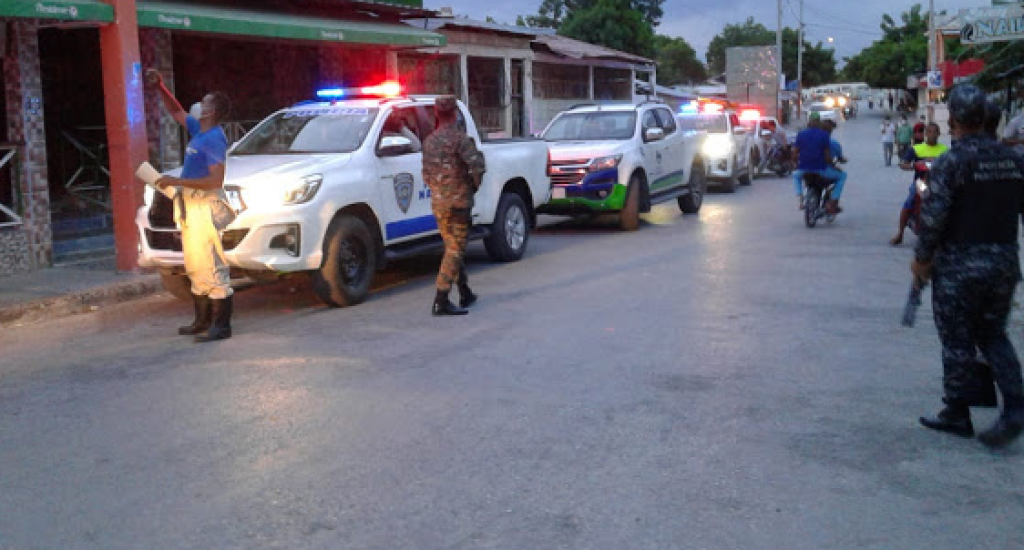
Presidential request to extend the state of emergency for 45 more days

IMG_5377.jpeg

With the new extension, the government could continue to apply proportional and temporary restrictions to the freedoms of transit (curfew), association, and assembly.

Santo Domingo, DR

After many rounds in which he delegated the decision to the Health Policy Cabinet’s technical team, President Luis Abinader yesterday asked the National Congress for the third extension of the state of emergency.

The request, deposited in the Chamber of Deputies, could be known tomorrow when this legislative body is in session. The ruling Modern Revolutionary Party (PRM) and its allies have a majority.

This new extension supports the bloc of deputies of the Dominican Liberation Party (PLD), which retains the second majority in that chamber.

This December 3, the current state of emergency expires, approved by the National Congress for 45 days, and President Abinader was due to present the request this week to extend it.

In case it is approved in the Chamber of Deputies and the Senate, the Dominicans would live under a state of emergency until 2021.

Spread of Covid
President Abinader has reiterated the need to continue with current measures that promote social distancing and curfew to control the spread of Covid-19.

Regarding this last measure, different sectors have weighed the possibility of making it more flexible during the December holidays.

Some legislators expressed the need to modify the current curfew to allow free movement, and what is limited is social gatherings.

The PLD supports it
The spokesman for the PLD in the Chamber of Deputies, Gustavo Sánchez, was yesterday to approve a new state of emergency.

“We are aware that we must approve requests for the extension of states of emergency. Unlike them, we have been understanding, and we must all face this health crisis,” he said.

During May and June, PRM legislators opposed the extension of the state of emergency for 45 days requested by then-president Danilo Medina, arguing that the measure would politically benefit the PLD candidate’s full swing election campaign.

The hours established in the current curfew are from 9:00 at night to 5:00 in the morning from Monday to Friday, and from 7:00 at night to 5:00 in the morning on Saturday and Sunday.

The previous state of emergency expired on October 18. However, President Abinader requested a 45-day extension, explaining that it was necessary because “it is still necessary to maintain some of these measures to achieve a safe social and economic reopening.”

The president said that the viral disease had been contained, but that if the state of emergency continues,”‘it will avoid having to take more severe measures.”

The measure establishes that the Government will develop proportional and temporary restrictions on the freedoms of transit, association, and assembly, following Article 266 of the Constitution and Article 11 of Law 21-18 on the regulation of states of exception.

In the first weeks of this month, the disease has been resurgent.

The Ministry of Public Health reported 419 new coronavirus cases and one death yesterday, in its epidemiological bulletin number 249.

KNOW MORE
Deaths and those infected
Contagions.

Yesterday’s report states that of 4,866 samples processed in the last 24 hours, they yielded 419 infections, an accumulated number of cases in the country of 138,829. The positivity rate stands at 11.92%.

Deaths.
While with the new death, there are already 2,311 deaths in the country as a result of the pandemic. There are 711 patients admitted for Covid-19 for 25% of the bed occupancy. In Intensive Care Units, there are 173, for 35% and 92 patients with ventilators.

Curfew violators face US$1,700+ fine

IMG_5359.png

Santo Domingo.- Violators of the curfew in Dominican Republic will now face fines ranging from RD$1,000 to more than RD$100,000 (US$1,700), according to a scale released Mon. by the Attorney General’s Office.

The fines will depend on the type of violation committed by a particular person or the owner of a commercial establishment that allows an agglomeration of people greater than that established.

Now the pedestrians who violate the curfew will pay a fine of RD$1,000; motorcyclists RD$2,000; the driver of a vehicle RD$5,000 and the person who is detained in a night club will pay RD$2,000.

While bars, restaurants or any other entertainment space, as well as a private party that violates the measures, will be fined RD$100,000.

The owner or person in charge of a bus that transports people and violates the measure, will be fined RD$50,000; the driver of a cargo vehicle RD$30,000 and the owner of a cockfight arena RD$100,000.

Abinader defines tourism as his main challenge for economic recovery

IMG_5375.jpeg

TOURISM SECTOR HAS NEEDED THE MOST SUPPORT AND REINFORCEMENTS IN THE LAST FIVE MONTHS

Tourism has been the most affected economic aspect in the first five months of President Luis Abinader’s mandate, who defined it as his main challenge for economic recovery.

During a press conference at the National Palace, the President assured that the bars and restaurants, as well as the tourism sector, are the aspects that have needed more support and reinforcements in the last five months.

“Many people tell us why we are always supporting the tourism sector because that is the sector that needs to recover,” he said.

According to the governor, the industrial sector, agriculture, free zones, and mining have regenerated faster.

Meanwhile, the Minister of Finance, José Manuel (Jochi) Vicente, added that the construction sector is another sector that has advanced despite the pandemic’s effects, showing the country’s economic recovery.

For his part, Lisandro Macarulla, Minister of the Presidency, said that “The reaction of these sectors and the economic dynamics that have been achieved even though we have not emerged from the crisis of the pandemic is a good sign that this year we will have robust growth.”

He explained that all sectors have grown in the last quarter of 2020 by 0.2%, except for tourism.

The Dominican Republic received four million fewer tourists due to the pandemic in 2020

IMG_5374.jpeg

According to statistics from the Central Bank, the country had a year-on-year variation due to the arrival of non-resident visitors of -62.7%

Santo Domingo, DR

Even though the tourism sector began to recover in July 2020, due to the effects caused by the coronavirus pandemic, tourists’ arrival did not reach the growth trend throughout the year that the visitor-driven industry had been exhibiting for years.

According to Central Bank statistics, for the year 2020, the arrival of non-resident visitors to the country was 2,405,315 tourists. An interannual variation of -62.7% 1,699,194 are other nationalities, and 706,121 are non-resident Dominicans.

However, at the end of 2019, 6,446,036 non-resident passengers entered the Dominican nation,representing 17% of all visitors to the Insular Caribbean and Central America, positioning the country as a leader in this region.

Due to the closure of national borders by air, sea, and land between March and June 2020, as a measure to mitigate the spread of COVID-19, the interannual flow of travelers in the second quarter of 2020 was zero (-100.0 %).

According to the Central Bank, thanks to the reopening of the airports in July 2020, tourism has been recovering. One example of this is that 1,011,224 tourists were received only in the July-December period.

“To give an idea of ​​the magnitude of the improvement experienced so far, if the figures for December 2020 are taken into account, the arrival of non-resident visitors (foreigners and Dominicans) reached 348,464 tourists, representing a 55.8% of the total number of non-resident visitors who arrived in the country in December 2019,” highlights a Central Bank report sent to the media this Thursday afternoon.

The financial entity adds that this constitutes a significant advance since 135,163 visitors arrived in the country in July 2020, for a proportion of 22.9% compared to the same month in 2019.

Recovery plan

According to the Central Bank, this improvement is exhibited thanks to the Responsible Tourism Recovery Plan that the Dominican Government promotes in conjunction with the private sector, which includes measures to promote the country as a safe vacation destination and promote the Brand Country.

The Government implemented the economic incentive package for the sector that includes an investment program of more than RD $ 420 million, the temporary elimination of the advance payment for six months, and the payment of the tax on assets until June 2021, as well such as the reduction of the Advance Price Agreement rate to 35% between September and November 2020.

The plan also includes internationally certified health safety protocols followed by tourism companies and travelers entering the country, basic health insurance in the event of being affected by the coronavirus during their stay.

Dominican Republic captures nearly half of the foreign direct investment made in the Caribbean

IMG_5373.jpeg

The Dominican Republic continues to be the first destination country for foreign direct investment (FDI) in the Caribbean, since in 2019 it captured 47% of the investments made in the region, according to the most recent report “Foreign Direct Investment in Latin America and the Caribbean” published last December by the Economic Commission for Latin America and the Caribbean (ECLAC).

That year, FDI inflows to the Caribbean totaled US$6,467 million, representing a 20.3% growth over 2018. According to the publication, this increase was influenced mainly by the entry of investments into Dominican territory.

Tourism was the sector that attracted the most significant interest from foreign investors and represented 29% of FDI inflows in 2019. In second place was the real estate sector, which represented 15% of the inflows, although these decreased by 13% concerning 2018, the publication states.

Other sectors that attracted investment were:

  • The electricity sector, where inflows grew by 85%.

  • Telecommunications, which had a negative balance in 2018, attracted 11% of investment in 2019.

  • Mining, where FDI grew by 50%.

On the other hand, in the manufacturing industry, the receipt of capital fell 53% and went from representing 20% of inflows in 2018 to 8% in 2019. FDI inflows to the financial sector also fell by 44%.

“In 2019 the country received $3.013 billion in FDI, 18.8% more than in 2018, and although this amount does not reach the record levels of 2017, it is almost 22% higher than the average of investments received from 2010 to 2017. In the first semester of 2020, however, the income fell by 22%, showing the strong impact that the pandemic had on the tourism industry, one of the most attractive sectors for foreign capital in the country,” indicates the report regarding the Dominican Republic.

As for the countries that contribute investment to the country, in 2019, the United States was the country where most of the assets came from, representing 31%. The other two most important investors were Mexico (21%) and Spain (13%).

Behind DR is Guyana, which received 26% of the inflows and surpassed Jamaica (10%) and the Bahamas (9%). The report states that before FDI grew in Guyana, these last two countries were the primary recipients of investment along with the Dominican Republic, according to Listín Diario.

However, the results of 2020 will be very different due to the impact of the coronavirus pandemic, as ECLAC estimates that in that year, global FDI will show a drop of 40% and between 5% and 10% in 2021.

Housing costs jump 13%, developers warn

IMG_5365.jpeg

Santo Domingo.- Dominican Republic’s construction sector on Thur. warned the government that housing costs could skyrocket in the coming weeks due to increases in construction supplies, especially the price of cement.

Jorge Montalvo, first vice president of the Housing Builders and Promoters Association (Acoprovi), said housing costs have already jumped 13%.

“We are already talking that if it were a house of RD$2.5 million, it’s already RD$250,000 more. So, that is going to be the difference between the fact that many people who could buy that home and take that financing, now cannot. In other words, the issue is delicate,” said Montalvo.

According to official data, for this same date last year, the bag of cement was around RD$283 “and currently they are talking between RD$365 and RD$ 375, for an increase of more than 28%.”

Montalvo added that as of January 11, the price of cement is expected to rise again.

OPINION January 8, 2021 | Full Caribbean tourism recovery possible post 2021

IMG_5364.jpeg

The View from Europe

David Jessop, Dominican Today senior Op-Ed contributor 

Last year was a disaster for Caribbean tourism. Estimates suggest that visitor arrivals to the region fell by 75% in the last three quarters of 2020 causing overall Caribbean economic growth for the year to contract by 6.2%.

Despite this, industry professionals now express cautious optimism that by the end of 2021 Caribbean tourism will begin to see a gradual but eventual full recovery.

Speaking about this, Frank Comito, the outgoing CEO and Director General of the Caribbean Hotel and Tourism Association (CHTA), says that while the industry did not anticipate tourism returning this year to anywhere near what it experienced in terms of arrival numbers prior to Covid-19, there were strong indications of pent-up demand and growth in the redemption of previously cancelled bookings.

While the first several months of 2021 will be a challenge, Mr Comito believes that the industry will now see gradual growth from a presently low base. “The region’s proximity to its main markets in North America, and the appeal of our outdoor-based product, coupled with vaccine implementation all point to a steady return, likely to really show as we approach mid-year”, he says.

Recent scenario modelling by the UN’s World Tourism Organisation (UNWTO) also suggests the same.

The Madrid based body estimates that full recovery to the 31.3m Caribbean visitor arrivals recorded in 2019 will occur sometime between mid-2022 and the start of 2024.

Frank Comito’s view is reflected by Ministers and other industry professionals who emphasise the need for tourism to use the experience gained during the pandemic to end its traditional ‘business as usual’ approach.

Jamaica’s Tourism Minister, Edmund Bartlett, does not expect the industry to bounce back fully until 2023 or 2024 based on when he expects past levels of air and sealift to have returned. He is cautiously optimistic however that the island “may see an early significant boost in 2021 if the vaccine is highly successful and becomes readily available”.

He says 2020 was a watershed year for the industry in Jamaica with an estimated US$5bn loss in earnings and a 2.3m decline in visitor arrivals.\

Prior to the appearance of the COVID-19 pandemic, the industry on the island had forecast a 5.2% plus growth rate over 2019, a record year. However, from March 2020 on, the pandemic triggered a precipitous decline in visitor arrivals with just over 1.1m visitors arriving in the first ten months of 2020 compared with 3.4m over the same period in 2019.

Significantly, Mr Bartlett believes that the pandemic has illustrated the need to better diversify the island’s tourism economy away from its primary suppliers of visitors, the US, UK, and Canada, which have also been having to address the economic shock of the pandemic.

He says this will see in the short and longer term, the country craft a new product built around “inclusiveness, safety, security and seamlessness”. In addition, he notes that Jamaica’s tourism will become more “inward looking” with government sustaining in the longer-term recovery strategies that include improved linkages with agriculture and a continuing emphasis on a ‘Rediscover Jamaica’ campaign which encourages Jamaicans to staycation to offset the shortfall in international visitors. The minister also emphasises that he intends to make the case for tourism workers globally to be considered for early vaccination so that the sector can quickly recover.

Writing about recovery, Neil Walters, the Acting Director General of the public sector Caribbean Tourism Organisation (CTO), noted in a new year’s message that although the region for the most part had been able to control the local spread of the virus, the pandemic had crippled many smaller tourism dependent economies.  Based on the experience, the advice of public health experts and the two-year cycle of previous pandemics, CTO he said, hoped that a return to ‘normalcy’ will occur beyond December 2021, but that the measures implemented to control the spread of the virus “may stay with us for an indefinite period”.

For both tourism and governments, the pandemic has been a wakeup call necessitating collaboration and offering an opportunity to reassess the industry’s potentially important future development role.

Frank Comito says that the pandemic has enabled the creation of new public-private partnerships and has improved industry research. He points to the collaboration regionally between the Caribbean Public Health Agency (CARPHA), CTO and CHTA to build health safety protocols, train, and track with employees and visitors which he believes will be the key to creating and communicating the long-term confidence which travellers and those who book travel to the region need.

He cautions however that recovery also requires the industry’s stakeholders to develop responses to the many challenges the sector faces. These he says include addressing its vulnerability to economic downturns; developing responses to periodic climatic, political, and public health crises; better managing growth, affordable airlift, and rising costs; addressing revenue leakage and competition from other markets; improving public-private partnerships; rebalancing levels of foreign and local ownership; and doing more to link to local entrepreneurs and small businesses.

What should not happen, he says, is sacrificing the progress the industry has made towards promoting sustainable development or diluting the cultural identity of the Caribbean. As visitor needs and behaviour continues to change, he believes, every part of the industry must adapt by training and empowering staff to accentuate and differentiate Caribbean hospitality, culture, identity, and diversity.

Undoubtedly, the pandemic has come as a shock to tourism, a sector that in the past has sometimes behaved as if it was unrelated to the region and people on which it depends. More importantly however it has demonstrated to governments, if any further proof were needed, that the industry is central to the future economic growth, employment, and prosperity of the region.

The recovery of tourism will now crucially depend on how and when borders are opened across the world, and the widespread availability of a vaccine. This should be the time when governments and the industry nationally and regionally consider tourism’s developmental role, supporting a better integrated Caribbean economy.

David Jessop is a consultant to the Caribbean Council and can be contacted at

david.jessop@caribbean-council.org

Previous columns can be found at https://www.caribbean-council.org/research-analysis/

Senators expected to approve extended curfew

IMG_5359.png

Santo Domingo.- In its first session of the year the Senate will debate the 11th  extension of the state of emergency submitted by the Government to halt the advance of COVID-19 in Dominican territory.

The resolution was approved on December 30 by the Chamber of Deputies and now the senators, who are expected to approve the measures that include a curfew.

It will be the 11th extension requested, the first was initiated by former President Danilo Medina. The current state of emergency will expire on January 15.

Region expects rapid return of tourism

IMG_5358.jpeg

SANTO DOMINGO. – The president of the Caribbean Hotel and Tourism Association (CHTA), Pablo Torres, pointed out that the region will experience a faster return of visitors than in other parts of the world.

Torres said that the return of tourism to the region would be “faster than in many parts of the world,” which was justified by the protocols to help reduce the effects of the Covid-19 pandemic in the region.

He stressed that tourism is the key to the economic recovery of the Caribbean area since it is a sector that provides a livelihood for thousands of people, as in the Dominican Republic, where this sector supports some 300 jobs.

Torres also said that tourism involves the inflow of income fundamental for the fiscal balances of the Caribbean governments.

For example, in the Dominican Republic, the arrival of tourists fell almost 76% last October, and the accumulated losses due to the income not received by that sector were around US $4 billion.

However, Torres assured that tourists’ arrival would make them verify that the Caribbean is the best place in the world to recover from the ravages of this pandemic. And that they have worked hard to fight Covid-19.

Public beaches to be open according to the new curfew schedule

IMG_5353.jpeg

Santo Domingo.– The Tourism Ministry notified that public beaches will be open as established by the new curfew schedule, from 5:00 in the morning to 5:00 in the afternoon from Monday to Friday, and from 5:00 in the morning at 12 noon on Saturdays and Sundays, and in compliance with security protocols.

Through its Twitter account, the ministry reported that it will allow the return, with transit until 5:00 in the afternoon, to those citizens and local families staying in hotels and resorts and their departure or checkout is on the weekend in the period from January 1 to 10, 2021. These citizens must show their identity card, license or passport.

In the case of people and families staying in villas or non-hotel rentals, the reservation certificate issued by the travel agency or tour operator will be allowed.

The hotels will not be able to carry out activities or events during the period from January 1 to 10, 2021. Weddings and private congresses previously scheduled may only be attended by people who are staying inside the hotel and complying with the protocol.

The ministry indicated that from January 1 to 10, recurrent inspections will be carried out at tourist establishments to guarantee compliance, and that if they do not obey the established regulations, these businesses will be sanctioned.

Dominican authorities extend complimentary traveler health insurance

IMG_5337.jpeg

Santo Domingo.– The Dominican Republic extended its free travel insurance program for all tourists arriving in the country by air until April 30th, 2021, Tourism Minister David Collado announced.

According to the official, the free assistance plan has been a success, as it contributes to position the Dominican Republic worldwide as a safe tourist destination, “where all kinds of experiences can be enjoyed with the peace of mind that there is a perfectly prepared medical system to care for visitors in case of any contingency at no cost to them.”

“The Dominican government is committed to the reactivation of our tourism sector in an efficient and responsible manner,” Collado stated.

The free insurance includes coverage for emergencies, ambulatory care, hospitalizations, medicine, lodging for extended stays due to an infection as well as flight changes in case of infection.

To benefit from the insurance upon arrival, all tourists are automatically covered once they check into their hotel. No further actions are required to activate it.

Public Health delivers equipment for sampling of covid-19 at Puerto Plata airport

IMG_5336.jpeg

PUERTO PLATA- The Ministry of Public Health reported this Saturday delivered the equipment for conducting coronavirus tests at the Gregorio Luperón International Airport in Puerto Plata while assigning the covid inspectors responsible for monitor compliance with the provisions aimed at preventing further infections from the disease and protecting travelers.

The delivery was made to the airport authorities, the lawyer Héctor Villalona, ​​coordinator of the COVID inspection teams, who highlighted that the action seeks to mitigate the incidence of COVID-19 in the country and protect travelers Dominican absent, as well as the foreigners who visit the country. They explained that it would be done about the tests through the breath for the detection of the coronavirus.

He explained that the interest of the Health authorities, led by Dr. Plutarco Arias, is to ensure that tourists and Dominican citizens can enjoy the Christmas and New Year festivities without worries.

“We delivered equipment to apply the tests to national and foreign travelers who visit us for the Christmas festivities, but we also installed the team of inspectors who will be responsible for ensuring that all the provisions are met, both the test-taking such as physical distancing, the use of masks and antibacterial gel, among others,” said Villalo.

He said that they have already covered all the airports in the country, where the accumulation has been controlled due to the euphoria with which the Dominicans and the relatives who receive them arrive.

Héctor Villalona stated that the COVID inspectors are spread out in different areas, mainly in businesses where many people attend, and assured that the Ministry of Health would not tolerate violations of the provisions in Decree 698 establishes curfew hours and other means that seek to control the disease.

InterEnergy Group issues a US$262.7M green bond

IMG_4157.jpeg

Santo Domingo - InterEnergy Group, a provider of energy solutions with a presence in the Dominican Republic, Panama, Jamaica and Chile, announced the issuance of green bonds for a nominal value of US$262.7 million.

The international bond issue, which matures in 2038, is the first placement of green bonds by a company in the private sector of Central America and the Caribbean.

In the course of the operation, offers were received for an approximate value of US$535 million, which represents double the value.

Presenting INICIA Collection: Most extensive editorial collection highlighting best of Dominican culture

IMG_4152.jpeg

Santo Domingo, December 21, 2020 – As part of its commitment to exalt culture and Dominicanness, INICIA presented the “INICIA Collection,” a virtual library that will include its editorial collection, a compendium of nine books that showcase the diversity and best of Dominican culture.

The books collected in the INICIA Collection, which transcend time and space, will now be available to the world through a web portal (www.coleccioninicia.com) and social networks. They can also be downloaded from Apple’s iBook and Amazon’s Kindle, where those hungry to know the wonders of the Dominican Republic can access them for free.

Mr. Felipe Vicini, Executive President of INICIA, highlighted the collection’s value that for almost a decade was reserved for those close to the organization. Now the firm democratizes for the enjoyment of all Dominicans and those passionate about art and culture.
“These publications have been a solid contribution to cultural development and a stimulus to the investigation of our valuable and rich history, with folklore, gastronomy, and architecture, and our cultural treasure from Taino art, we bring back to the memories the enjoyment of the essential traditions and customs that are part of a cultural past that substantiate and give meaning to what we call the Dominican Republic,” said Felipe Vicini.

“With these publications, we have encouraged the interest of specialists in deepening the study of aspects of our heritage legacy that were previously unpublished in the field of Dominican culture,” added Vicini.

Unique in its class, the INICIA Collection includes maps, unpublished high impact images, aerial, terrestrial and underwater, in addition to technical-scientific information that has been compiled and processed into easy-to-read texts that are now available free of charge to everyone.

This virtual library shows a vast natural and cultural heritage, including our fauna, flora, endemic species, seas, gastronomy, architecture, history, among others, constituting an invaluable legacy of what we are to project to the world.

The portal will allow the dissemination of this collection that brings together the work of dozens of prominent professionals who for months were dedicated to collecting visually and in writing on the subject, capturing in beautiful volumes the result of their experiences and vision.

From December 21, an exhibition with the most emblematic contents of the volumes will be available to the public at the Museum of the Royal Houses throughout December and January, for the enjoyment of all Dominicans and tourists visiting the country. Thanks go to the Ministry of Culture’s support and collaboration and its Museums Directorate for this exhibition.

Government anticipates that it will announce major works for Puerto Plata in January

IMG_4150.jpeg

The president,  Luis Abinader,  revealed that important public and private investments would be announced that will relaunch tourism in Puerto Plata and (the Amber Coast) to transform the tourist area once and for all.

“The hotels in Puerto Plata have already begun to open their doors, not in the best circumstances in the area, or the country or anywhere in the world, but the important thing is that the private sector, hit by the crisis, tourism and the public sector can work hand in hand,” said the president.

He reiterated that next January, he will announce the details and scope of a major tourism relaunch project that will include all the coasts of the María Tinidad Sánchez, Espaillat, and Puerto Plata provinces.

Abinader stressed that with the project, the Dominican Republic would be the main tourist center in Latin America and the Caribbean region.

The president said that the Government and the tourism sector have done a great job hand in hand to continue reactivating that industry and with its development.

He thanked when giving a brief speech at the reopening of the Boutique Casa Colonial hotel, the confidence of the tourism sector in the government’s actions to recover the sector that has been hit by the crisis generated by the coronavirus pandemic.

The President was accompanied by the Minister of Tourism, David Collado, the Administrative Minister José Ignacio Paliza and Senator Ginette Bournigal, together with the executives of the VH Hoteles parent company of Casa Colonial, the Gran Ventana hotel and the Atmosphere hotel, Sara García and Roberto Casoni, as well as the directors of the main hotel associations in the region.

Collado expects more than 200 thousand tourists to arrive in December

IMG_4149.jpeg

Tourism Minister David Collado affirmed that they estimate that more than 200 thousand tourists will arrive in December without counting on Dominicans’ visit living abroad.

He said that the goal set and the private sector of more than 400 thousand tourists arriving from August to December 2020 would be exceeded.

According to Central Bank figures, in November, the country received 175,100 non-resident tourists; in October, 138,276; 103,942 in September and 110,284 in August.

Collado offered these details when opening the Paradisus Palma Real hotel in Punta Cana. He highlighted that the airflow is only 39% less this month than the same period of 2019; what he understands is a recovery in flights and airlines’ arrival.

He indicated that the recovery of tourists from the United States is going very well, and to date, there is only 15% less than last December.

He explained that the market that has responded least is Canada due to the country’s restriction that if its citizens leave, they must quarantine upon return, which affects the numbers of the Dominican Republic by 80% less.

“The sending countries are all on a regrowth like Germany, France, Russia, but the flights are coming. Condor came yesterday an important airline with more than 70% of its plane passengers, after an agreement with the Mitur. Also, British and Air France confirm flights and this for the safety offered by the destination ”, he said.

Comply with the protocols. Collado said that international organizations agree that the country is prepared, that it is a safe place for tourists, and that the health measures and protocols adopted are the most competitive and innovative, including insurance for tourists.

He indicated that the committee is now that the authorities and hoteliers are rigorous in complying with sanitary measures and protocols.

Review in airports. Collado affirmed that the rate of positive COVID upon entering the country is 1%. That is, it does not represent a risk for Dominicans. And between 15 and 20% of the arriving passengers are verified.

“You cannot neglect the protocols. We are insisting on being healthy. On Friday, we met with the airports, Customs, Migration, airport officials, Civil Aviation Board, and Cesac so that at the times when more flights arrive, there are more inspections. And now they have had more personnel from each entity, “explained the minister.

COVID report. Collado explained that the report of COVID cases in tourist areas reflects that in Punta Cana, La Romana, Bayahíbe, Samaná, and Las Terrenas, the cases are significantly reduced. Still, in Puerto Plata, it is higher, and therefore the Ministry of Health has established new measures.

Recovery
The Area Managing Director of Meliá Hotels International in the country, Santiago Rivera, upon opening the Paradisus Palma Real hotel, highlighted that this allows almost all employees to be incorporated into work, leaving only 100 of the 3,000 jobs they generate suspended.

Rivera stated that they have four hotels open from October 1 and 2,500 rooms available.

Rivera stressed that the FASE program’s expansion until March 1, 2021, is a relief and understands that the Government has applied adequate measures.

Rivera presented a plaque of recognition to the Minister of Tourism, David Collado, in gratitude for the sector’s support and his efforts to recover the country’s tourism.