US airlines will inform passengers of extra fees

New York. Passengers boarding U.S. airlines must be informed about extra charges, including baggage fees, itinerary changes, and seat selection, when they purchase a ticket.

This is stipulated in a new regulation announced a few hours ago by U.S. President Joe Biden, who said: “a passenger cancels and then has to pay a fee to rebook (a ticket).”

“It’s just not fair,” the president said after a meeting with several cabinet members, including Transportation Secretary Pete Buttigieg.

Millions of Dominicans, as well as other ethnicities, travel annually on different U.S. airlines, nationally and internationally, and sometimes face problems with airline employees for extra charges in some of these services.

The guidelines for foreign airlines operating in the U.S., such as travel shopping websites, must clearly show when offering a fare to the consumer all costs associated with baggage, changes, cancellations, and group seating, among other things.

“Passengers have the right to know the full and true cost of flights before purchasing a ticket,” Buttigieg’s secretary said in a statement.

This is the second measure announced by the DOT this month, aimed at pressuring airlines to improve customer service.

In early September, the government launched a virtual database that allows consumers to check which airlines offer payment or compensation for cancellations.

Hurricane Ian borders on category 5 in its rapid advance towards Florida

Hurricane Ian quickly gained strength Wednesday off the southwestern coast of Florida, packing top winds of up to 155 mph (250 km/h), bordering on a dangerous Category 5. Strong winds and downpours battered Florida’s populated Gulf Coast. Mexico, with Naples and Sarasota at “maximum risk” of devastating storm surge. US Air Force hurricane hunters confirmed that Ian strengthened over the warm waters of the gulf after sweeping through Cuba, knocking out the power grid and causing a widespread blackout on the island.

The meteor could cause a storm surge of up to 3.6 meters (12 feet), said the United States National Hurricane Center (NHC), based in Miami, which asked the population to evacuate the area. danger if they can. The authorities ordered the mandatory evacuation of more than 2.5 million people, although legally the eviction cannot be forced.

As of 7 a.m., Ian’s vortex was about 35 miles (105 kilometers) west-southwest of Naples and moving toward the coast at 10 miles (17 km/h). Floridians scrambled to board up their homes and store their most precious belongings on the upper floors before leaving. “You can’t do anything about natural disasters,” said Vinod Nair, who drove inland from the Tampa area Tuesday with his wife, son, dog and two cats looking for a hotel in the tourist district of Orlando. “We live in a high-risk area, so we thought it best to evacuate.”

Tropical storm-force winds of 39 mph (63 km/h) reached Florida by 3 a.m., with the first hurricanes being recorded at 6 a.m., well before the storm. Up to 18 inches (46 centimeters) of rain could fall near your entrance area. “It’s a strong storm, it’s going to dump a lot of water on its way in,” Florida Gov. Ron DeSantis said at a news conference in Sarasota, a coastal city of 57,000 that is on Ian’s likely path. “And that kind of storm surge is dangerous.”

Ian’s advance slowed over the Gulf, allowing it to grow in size and intensity. Hurricane warnings covered about 220 miles (350 kilometers) of the state’s west coast, including Fort Myers, Tampa and St. Petersburg, which could see the first direct hit by a Category 3 or larger hurricane since 1921.

After hitting western Cuba, Ian threatens Florida as a major hurricane

Hurricane Ian, which made landfall in Cuba this Tuesday morning with winds of about 125 miles per hour (205 km/h), will maintain its strength as it crosses the largest of the Antilles and will strengthen when it emerges in the Gulf of Mexico as a major threat to Florida (USA), in the form of storm surge, wind, rain and tornadoes.

The US National Hurricane Center (NHC) reported at 0800 hours (1200 GMT) that Ian, category 3 on the Saffir-Simpson scale (out of a total of 5) is having “significant impacts of winds and storm surge over western Cuba”. At the time of the bulletin, the center of Ian, the fourth hurricane of 2022 in the Atlantic, was located about 10 miles (15 km) northeast of the city of Pinar del Río (Cuba) and about 115 miles (185 km) to the south-southwest. of the Dry Tortugas, one of the Florida Keys.

Beginning tonight Ian, which is moving at about 12 miles per hour (19 km/h) as it passes over western Cuba, turn north-northeast and slow down. Maximum sustained winds are near 125 mph (205 km/h) with higher gusts, and little change in strength is expected as Ian moves over Cuba, although it will strengthen as it moves across the southeastern Gulf of Mexico.

Hurricane-force winds extend up to 35 miles (55 km) from the center, and weaker tropical-storm-force winds extend out to 115 miles (185 km). According to the trajectory forecast, after having passed Cuba, Ian will emerge today over the southeastern Gulf of Mexico and pass west of the Florida Keys, some of which are under a hurricane warning.

On Wednesday it will approach the west coast of Florida and will make landfall probably that night or early Thursday somewhere in the central part of that coastline as a “dangerous major hurricane.” The warnings and vigilance of the NHC also extend to a sector of central Florida and another of the coast of the southeast coast of the state.

As in Cuba, in the part of Florida included in Ian’s trajectory cone, dangerous storm surges can be produced that, combined with the tide, flood normally dry coastal areas.

In western Cuba, according to the NHC, the sea level can rise between 9 and 14 feet (2.7 to 4.2 meters). The water could reach up to 10 feet (3 meters) above ground level in the Tampa Bay area (Florida), where more than 3.1 million people reside and mandatory and voluntary evacuation orders are already in force.

In addition to those sea level rises, accompanied by strong waves at some points, Ian is expected to produce heavy rains in Cuba and Florida, with the risk of flash flooding.

Payment of 10 dollars to Dominican passengers and resident foreigners eliminated

In one month and 15 days, national and foreign air operators that carry out international passenger transport to and from the Dominican Republic will no longer be able to charge US$10.00 for a tourist card on air tickets to Dominicans and foreign residents. Through Resolution 217-2022, the president of the Civil Aviation Board (JAC), José Ernesto Marte Piantini, instructed air operators to make the necessary adjustments to their computer systems in order for the aforementioned position to be eliminated. .

This measure was adopted after an extraordinary meeting held by the organization he leads and whose only point to discuss was to review the payment mechanism of the tourist card issued by the Dominican Republic, to avoid the illegal collection of the US$10 in air tickets for Dominican passengers and foreign residents.

The document indicates that the airlines that carry out international passenger transport to and from the Dominican Republic are responsible for strict compliance with this resolution. The provision is also valid for foreigners residing in the Dominican Republic and its implementation must be effective and efficient within 45 days, according to a statement issued by the JAC.

The information was also notified to the General Directorate of Migration, the Association of AirLines of the Dominican Republic, the Dominican Association of Air Lines and the Legal Representatives of the National and Foreign Air Operators.

CAB authorizes 13 new routes for five airlines

The Civil Aeronautics Board (JAC) authorized the launching of 13 new routes by five airlines, which will begin between November 2022 and January 2023, as well as the availability of 61 new international routes, which so far do not have an airline to operate them.

Condor, Neos, Swoop, Frontier, and Air Century airlines received authorization to launch 13 new international services.

German airline Condor received permission to fly between Düsseldorf International Airport (DUS) and La Romana International Airport (LRM). Condor already flies from Frankfurt (FRA) to Puerto Plata and Punta Cana, totaling seven weekly flights via Cirium. Condor will operate these services between November 4, 2022, and April 7, 2023.

In that regard, Neos, the Italian carrier, will also be able to operate flights between Rome Fiumicino International Airport (FCO) and Verona International Airport (VRN) to La Romana. The Milan-based airline already flies from Milan Malpensa International Airport to La Romana once a week. NEOS will operate 21 flights on the Rome/La Romana route and 14 on the Verona/La Romana/Montego Bay route for a total of 35 round-trip flights from November 4, 2022, to March 25, 2023.

Meanwhile, Canadian low-cost airline Swoop received authorization to operate between Hamilton International Airport (YHM) and Punta Cana. Swoop will begin operations from January 11 to April 26, 2023, with a frequency of one flight per week, on Wednesdays. This airline already flies from Toronto to Punta Cana with two weekly services.

Likewise, Frontier, the ultra-low-cost airline from the United States, has also requested the Dominican authorities to modify its Operating Permit. The airline seeks to fly the Tampa-Santo Domingo and Tampa-Punta Cana routes. The start of these routes from Tampa International Airport (TPA) is projected for November 5, 2022. The airline will use its Airbus A320neo fleet, which has 186 passengers.

Finally, Dominican airline Air Century received authorization to launch seven new international routes. Six of these services will be operated from Las Americas International Airport (AILA) and one from Punta Cana. The destinations of these new routes are Guatemala, Tampa, Costa Rica (the government did not specify whether the route will fly to San Jose or Liberia, Costa Rica’s main destinations), Havana, Santiago de Cuba, and Miami. The Miami route will be operated from Santo Domingo and Punta Cana. These routes will be launched in November.

Marc Anthony delights Dominicans with 12 songs at the Olympic Stadium

Marc Anthony is one of those artists that is always worth seeing even if he leaves the public wanting more of him. Such as in his presentation on Thursday night at the Félix Sánchez Olympic Stadium where he only offered the Dominicans 12 songs from his extensive repertoire.

An hour and 20 minutes was the exact time that the people who gathered at the stadium, conditioned for only 15,000 people, enjoyed the Puerto Rican artist on stage.

With a mix of tracks from the songs that he would later perform loudly, Marc Anthony marked his entrance on stage accompanied by his faithful musicians who once again showed his talent with the instruments.

Around 10 pm, full of energy, dressed completely in black and wearing dark glasses, “El Flaco” began with “Pa´llá voy”, the first single from the album of the same name, released recently. The artist set foot on Dominican soil as part of his “Living tour” tour with which he demonstrates that although it has been 29 years since his debut, his style and identity within salsa has earned him affection and recognition. of the public.

Themes such as “Valió la pena ”, “And there was someone”, “Against the current”, were chanted by the spectators out loud, but 12 songs were not enough and they wanted to continue enjoying more. Marc Anthony wasted deliciousness showing that, in addition to being a living legend of salsa, he not only sings it, but also dances it and loves it.

The artist, together with his masterful band, delighted those present with his voice and dance steps while performing some of his hits that have marked generations. Songs like “Until yesterday”, “What price does heaven have” and “Flor pálida” were enough with which its chords will sound so that the public will begin to chant it.

The 54-year-old salsero had little interaction with the Dominican public. “I am at home”, were his first words to the attendees and that is how it is since the artist has a villa in Casa de Campo, La Romana.

Between song and song, Marc Anthony took a moment to blow kisses to his girlfriend, the first finalist of Miss Universe 2021, Nadia Ferreira, his faithful companion since they made their relationship public five months ago. He then paused again to say: “May God bless you and long live the Dominican Republic.”

 The list of songs was followed by “What a price does heaven have”, “Bad”, “I know you well”, “They seem like Friday”, after the latter the singer said goodbye to the public, but it was to return a few minutes later overflowing with Energy. “Tu amor me bien” and “Vivir mi vida” were the songs with which Marc Anthony said goodbye to the Dominicans at 11:25 at night, leaving an audience with the desire to continue enjoying his music.

Abinader promises help to Samaná

Las Galeras, Samaná, DR
President Luis Abinader visited the municipality of Las Galeras, Samaná province, yesterday, where he met with farmers and local authorities. He assured that no family affected by Hurricane Fiona would be left without a helping hand from the Government.

The president said that this is a time for the nation, for the country and that everyone must work together. “And not a single house will be left without being restored, I guarantee it,” he said.

The head of state announced that he deposited RD$2 million to the municipality of Las Galeras to assist those affected and asked the residents to be patient until the necessary help arrived.

The president promised that at the weekend, they would begin a special reconstruction day, covering every corner of the province, with all officials and personnel distributed in each place to ensure no one was left out.

He said that the journey covers a total of 8,300 homes, of which 5,500 correspond to the eastern zone and 2,800 to the northeast, in a tripartite manner, with the participation of municipalities, State institutions, and neighborhood councils.

Protocol for aid
Abinader explained that to carry out the work with the materials that will arrive, such as wood, nails, and zinc, a protocol had been drawn up which involves the participation of the city council, civil society, neighborhood councils, the affected people themselves, and government personnel.

The governor pointed out that up to now, the electricity service has been reestablished to a great extent and that they expect that in about two days, it will be finished in its totality.

He highlighted the presence of the director of INAPA, Wellington Arnaud, who said he is present to bring solutions and ensure the restoration of everything related to the water issue.

He highlighted the help offered by the Dominican-French community and added that the French Development Agency is the one that has collaborated the most with the Dominican Republic.

Abinader informed that ten technicians are already working on the survey of those affected in the agricultural sector. As a result, it has been determined to restructure the payment of the current loans with the Agricultural Bank with up to seven years’ terms and zero interest.

Investment of RD$650 millions for tourism development in La Vega announced

The Minister of Tourism, David Collado, announced an investment of more than 650 million pesos in different works to strengthen tourism development in the province of La Vega.

“From the Ministry of Tourism (Mitur) we will spare no effort to guarantee the definitive take-off of tourism in this beautiful province,” he said.

He also reiterated that tourism recovery is complete in the Dominican Republic, where more and more visitors are arriving.

He stated that the effort to achieve the recovery of tourism has been worthwhile since thousands of people have returned to their jobs.

“My greatest satisfaction is when I visit a destination and someone comes up to me and tells me that thanks to the work we have done they have recovered their job and with it the economic stability of their family. For me, tourism has a human face. Its welfare must be felt by the people,” the minister emphasized.

The official recalled that in August, Mitur launched its campaign “Tourism in every corner,” whose main objective is to highlight the potential of each province of the country, emphasizing that La Vega has several tourist attractions in each of its municipalities, from nature with a pleasant climate, extreme sports, gastronomy, rivers, mountains, among others.

Cap Cana: Sanctuary the most affected; Margaritaville only operating

The Sanctuary hotel was the one most impacted by the hurricane’s high winds when it moved into Cap Cana with greater ferocity. According to arecoa.com, this hotel as well as the others run by Grupo Playa in the complex are closed.

The Secrets de Cap Cana was another hotel impacted by Fiona, and it will be closed for a while. The only restaurant open in the complex is still Margaritaville. Customers from Cap Cana’s surrounding communities are welcome at Karisma’s restaurant.

The temporary closure of Sanctuary Cap Cana, Hyatt Zilara Cap Cana, and Hyatt Ziva Cap Cana has been prolonged until this month’s 30th, according to an update of information about Playa Hotels & Resorts’ lodging facilities published this Wednesday, September 21.

In addition, starting tomorrow, September 22, through September 30, 2022, the Hilton La Romana will be closed. Recall that the brief shutdown was planned to last until next Friday, March 23.

The communication sent to its guests, which this digital had access to, states, “As we continue to assess the status of our properties impacted by Hurricane Fiona, we have decided to extend the temporary closure of Sanctuary Cap Cana, Hyatt Zilara Cap Cana, and Hyatt Ziva Cap Cana through Friday, September 30, 2022.”

The agreements reached after the meeting of Kamala Harris and Abinader in Washington

The Vice President of the United States, Kamala Harris, held a meeting last week with President Luis Abinader and other Caribbean leaders, in which they discussed “concrete short-term solutions” in three areas that they have worked on since the first call in April Harris noted: energy security, finance and food security.

Regarding the last point, Harris assured that he will send a team to the Caribbean this fall (from September 23), to start the process of financing for development, which he pointed out, was a “subject of extensive debates in our previous meetings”. To contribute to food security in the Caribbean, affected by the war in Ukraine, the pandemic and the climate crisis as in the rest of the world, the United States has “committed to allocate USD 28 million in assistance,” Harris declared.

As well as the implementation of “good agricultural practices” and the commitment to improve these practices in the Caribbean countries and promote the elimination of barriers not corresponding to tariffs in order to “facilitate the movement of food in the region”, the vice president stated.

“In this sense the United States assumes commitments in four areas in particular. First, to identify new clean energy projects; provide technical assistance to our partners in the Caribbean; attract investors to the Caribbean; and improve access to financing for development.” the vice president continued.

Harris said that the actions of energy security and finances are oriented to the climate crisis, in view of which the first measure that the country will adopt is to accelerate the implementation of the “Association between the United States and the Caribbean to address the Climate Crisis, also known as as PACC 2030”, which he presented at the Summit of the Americas in Los Angeles.

Among the measures that the United States government will seek to implement in the region to guarantee food for the population, they also foresee the incorporation of “intelligent technology with respect to the climate” for the protection of food products and the production system of themselves.

 They will also provide training in pest control management.

“The relationship between the United States and the Caribbean is based on ties and common interests. As neighbors in the Western Hemisphere, we believe that it is essential that we have a relationship based on close collaboration, knowing that this will benefit our shared prosperity and security, which is why we, the United States, have expressed our determination to increase our commitment and collaboration with our Caribbean partners”, emphasized Biden’s partner.


Puerto Plata Highway is Blocked by Fiona Aftermath

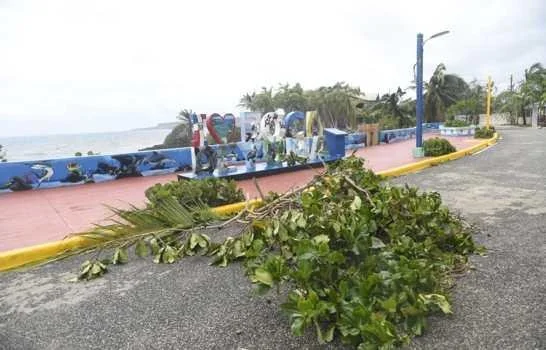
As a result of Hurricane Fiona, traffic on the Puerto Plata tourist highway has been hampered since the early hours of this Tuesday. The trees that fell due to the strong winds of the natural phenomenon have paralyzed traffic from Puerto Plata until about The Summit, in Santiago de los Caballeros.

Brigades from the Ministry of Public Works, the city council, and members of the relief agencies headed by the Civil Defense collaborate to make traffic in the area viable. These organizations work to collect the debris left behind by Hurricane Fiona, with the aim of restoring traffic in the affected areas. During the night and early morning of Monday, Fiona caused trees to fall in different parts of the province and in the main municipality.

Currently, the reports issued by the Directorate of the Emergency Operations Center (COE), keep Puerto Plata on yellow alert.

This time tourism was better able to weather the hurricane

The Dominican tourism sector was able to face good conditions during the passage of Hurricane Fiona through the country, suffering only minimal damage to infrastructure and vegetation.

Representatives of the sector agreed to emphasize that the situation in hotel facilities is under control and operating on the basis of risk prevention protocols carried out by the hotels.

“The vast majority of hotel rooms are operating, and the damage to infrastructure was minimal in most hotels. However, the main impact was seen in light structures on the beaches and with fallen trees and bushes,” assured the president of Asonahores, Rafael Blanco Tejera, yesterday.

Ernesto Veloz, president of the Association of Hotels and Tourist Projects of the East (Asoleste), reported the impact of the strong winds and rains. Still, the situation is under control, with greater damage to the infrastructure facing the sea, such as restaurants, kiosks, docks, and rooms facing the sea.

Likewise, the Punta Cana International Airport, which had suspended its operations, communicated that it has resumed operations since yesterday at noon and that the airlines are operating with the arrival and departure of passengers.

The airport’s statement said that they would continue to work for hand in hand with the Dominican Civil Aviation Institute (IDAC) and the Emergency Operations Center (COE), taking the necessary precautions and following international aviation safety protocols to ensure the safety of passengers and the entire airport community.

COE Report
Hotel infrastructures in the eastern zone, especially in the province of La Altagracia, were affected by the passage of Hurricane Fiona, houses, restaurants in the beach area, and the suspension of electric service.

The most affected areas are Cabeza de Toro, Villa Playboy, Verón, and Macao, according to Bruno Benítez, Head of the Department of Risk and Disaster Management and coordinator of the Emergency Operations Center (COE) for the Verón-Punta Cana area.

Benítez said three houses had been destroyed as of midday yesterday, and 400 were affected.
He further reported rescue teams had been deployed in Macao because the Maimon river had overflowed.

He said that there was no flooding.

Fiona hits the East and Samaná, affects agriculture and energy

Flooded communities, houses without roofs, broken bridges, destroyed and blocked roads, downed trees, and 60% of the power lines deteriorated in La Altagracia due to the passage of Hurricane Fiona in the East and Cibao. This province El Seibo, Hato Mayor, and Samaná were the hardest hit areas.

The Punta Cana-Macao Energy Consortium (CEPM) released the figures for the damages to the system.

The Ministry of Agriculture reported that agricultural production suffered severe damage, which is being evaluated. The winds and floods affected cattle farms, banana plantations, cassava, cocoa, rice, vegetables, and fruit trees.

Fiona’s tear
According to the Emergency Operations Committee, Fiona struck the East at 3:05 a.m. It entered through Cabo San Rafael, with 140 kilometers per hour winds.

Authorities indicate that in La Altagracia, 40 to 50% of the power poles were blown to the ground, blocking streets. Ninety percent of commercial signs and billboards were destroyed. The most vulnerable areas were flooded.

Senator Virgilio Cedano said that during one of his tours, he observed that the damages were substantial and that it was almost impossible to move along the streets and roads due to a large amount of debris.

“We are proceeding to make the formal survey of the damages as far as the situation allows us. We cannot pass the bridges to reach the neighborhoods, because the river is very high, and with so much water, the bridges are weakened,” said the legislator.

In Higüey, panic attacked the residents of vulnerable neighborhoods, such as Antonio Guzmán, La Florida, Las Cucarachas, Los Soto Bajo, Villa Cerro, and Pepe Rosario, due to the flooding of the Duey and Quisibaní Rivers, which surround the areas.

In El Seibo province, the situation was very similar. Fiona was raging against the wooden houses with zinc roofs, some of which had been lifted by the winds. People cried out, unprotected, seeing their belongings damaged. “We have many roofless houses, trees on the ground and much of the power line,” said Senator Santiago Zorrilla. Nevertheless, he said that there were no human losses.

In Miches, the Yeguada river entered the town. Civil Defense had to work hard to get people out of their homes to avoid tragedies. The most impacted areas were Santa Cruz de El Seibo, El Cedro, and its surrounding areas.

In Samaná, Fiona left a catastrophe, according to its people. “The winds have done serious damage to property, there are homeless people, many are in shelters. We prepared a contingency plan to help the victims,” described Senator Venerado Castillo.

The downpours flooded the municipality of Santa Bárbara, the municipal district of El Limón, Las Galeras, and Las Terrenas, northeast of Samaná.

Early in the morning, the intensity of the rains kept the currents of the Maguá river and the Paña-Paña stream swollen. Rescue agencies made efforts to save citizens in danger.

Castillo affirmed that many houses and the electricity poles were affected, and many victims were in shelters and relatives’ homes.

Regarding the state of the highways and roads, he indicated that the stretches of Hato Mayor-San Pedro; Hato Mayor-Sabana de la Mar were cut off.

Locals reported that electric power service was suspended in its entirety in Hato Mayor. In addition, businesses were affected by the wind gusts, which destroyed their windows.

Congressman Saury Mota asked President Luis Abinader to declare a state of emergency in the province. “Among the most affected sectors are the neighborhoods of the northern zone, Los Multis, Sabana,Hatillo, Gualey, Parque Central. The rains have caused the electrical service to be badly affected, and homes destroyed and flooded, and many people have left their homes,” said Mota.

The congressmen agreed that the most important thing was to rescue and attend to all people in need of emergency services, supply them with drinking water and food in the shelters, help those displaced to other homes, and then enter the phase of repairing homes and rebuilding destroyed houses together with the central government.

Three airports remain out of service, Punta Cana airport resumes operations

Santo Domingo, DR
The interim director of the Dominican Civil Aviation Institute (IDAC), Héctor Porcella, informed that the Punta Cana International Airport resumed its flight operations after it was closed on Sunday night due to the passage of Hurricane Fiona.

Porcella said that the resumption of flight operations through the referred terminal occurred at noon with the arrival of an international flight.

“As for flight operations through Punta Cana International Airport, everything has already returned to normal with the reopening of international commercial flights,” Porcella assured.

He also clarified that flight and passenger operations through the José Francisco Peña Gómez Las Américas International Airport (AILA) remain normal.

“Right now they are operating without problem the International Airport of Las Americas, Jose Francisco Pena Gomez, which has never stopped operating. And now Punta Cana which resumed its flights at noon this Monday,” expressed the interim general director of the IDAC.

Operations at the Punta Cana airport were suspended on Sunday night with the terminal’s closure on the recommendation of the IDAC due to the impact of Hurricane Fiona, category 1, which affected the East and Northeast regions of the country.

The airports Catey, Professor Juan Bosch, of Samaná; the International airport of La Romana, and Arroyo Barril, of Samaná, are still closed.

Porcella explained that as the effects of the natural phenomenon diminish, the other closed terminals could be reopened in the next few hours.

Center of Fiona is in the Atlantic; vigilance urged for possible coastal penetrations

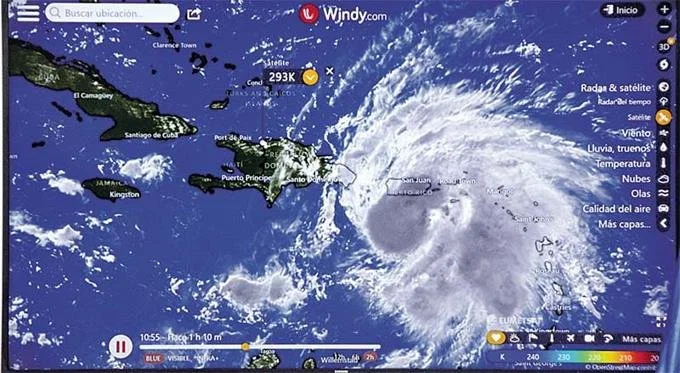
The National Meteorological Office (Onamet) informed this Monday that after 1:00 pm today, the center of hurricane Fiona was located over Atlantic waters very close to the coast of the municipality of Las Terrenas Samaná.

The institution said that the swell would continue to be abnormal, especially on the north coast, northeast, and southeast points, expecting wave heights between 10 to 14 feet with higher breakers, reaching up to 18 feet.

“We must also be vigilant for the possibility of coastal penetrations of the sea at low points,” he said.

The Onamet maintains a hurricane warning from Punta Caucedo to Cabo Francés Viejo, a hurricane warning from Cabo Francés Viejo to Puerto Plata, and a tropical storm warning from the Barahona peninsula to Punta Caucedo.

Location
“At 1:00 p.m., Hurricane Fiona was located near latitude 19.4 north and longitude 69.3 west, its center over Atlantic waters very close to the coast of the municipality of Las Terrenas Samaná. The phenomenon has maximum sustained winds of 140 kilometers per hour with higher gusts,” he explained.

The Onamet said that the hurricane-intensity winds extend to about 45 kilometers and storm-intensity winds to about 240 kilometers. Fiona is moving northwest at about 13 kilometers per hour.

Forecast for this afternoon
During the course of the afternoon hours, the cloud bands distributed over a large part of the national territory will be approaching from the south and north, causing rains that can be moderate to locally heavy with frequent gusts of wind of tropical storm or hurricane intensity.

The Onamet explained that in the border area and the southwest, the rains are expected to be less intense compared to other areas of greater affectation, however, showers with thunderstorms and isolated wind gusts are expected.

Paliza: President to declare tomorrow Monday as non-working day due to Hurricane Fiona

President Abinader postpones his trip to wait for the passage of hurricane Fiona.

The administrative minister of the Presidency of the Republic, José Ignacio Paliza, announced that President Luis Abinader would declare this Monday as a non-working day due to the passage of hurricane Fiona through the national territory. Likewise, the official declared that the president postponed his trip to the United Nations General Assembly next Tuesday, which was scheduled for this Monday.

Meanwhile, the director of the Emergency Operations Center (COE), Juan Manuel Méndez, and the other authorities of the civil protection organizations revealed that the phenomenon Fiona is at the moment 240 kilometers away from Saona Island with a translation speed of 13 kilometers per hour.

In addition, they said that Fiona reached category 1 with winds of 130 kilometers per hour and 20 kilometers in the interior of the area that will begin to be felt directly in the early hours of Monday morning; however, the rains and winds of the phenomenon are already being felt in the northeastern, eastern and southeastern regions of the country.

In addition, the authorities indicated that the whole country is still under meteorological alert due to the passage of hurricane Fiona.

The director of the Emergency Operations Center (COE), Juan Manuel Méndez, instructed this Sunday the civil protection, relief, and rescue organizations to carry out mandatory evacuations in vulnerable areas of the provinces under red and yellow alert due to the passage of storm Fiona which is expected to arrive this Sunday to the territory of Puerto Rico and to reach the Dominican Republic by the early hours of Monday morning.

On Tuesday, our territory will continue to be quite humid and unstable due to the cloudiness associated with tropical storm Fiona. Showers, thunderstorms, and wind gusts are forecast, especially over the north, northeast, northwest, southeast, southwest, and Central Cordillera regions.

Hurricane Fiona is felt in several parts of the country

Santo Domingo, DR
Since the middle of this past Sunday, Hurricane Fiona began to have an impact on the deterioration of weather conditions in the Dominican territory with rains and wind gusts that increased as the hours went by.

Although the eastern zone has been the one that has registered the greatest presence of these conditions, the characteristics have been repeated in different points of the country.

In view of the consequences of this phenomenon, state and municipal measures have been adopted to preserve lives and avoid risky situations, among them, the declaration of a non-working day for this Monday.

The Executive Power’s decision includes the suspension of public and private work throughout the country. Likewise, the mandatory evacuation of people at risk in the provinces has been issued under red and yellow alerts.

Precisely, these alerts cover more than 20 of the provinces, and the remaining ones remain in green.

According to reports from the National Meteorological Office (Onamet), by Sunday afternoon, Fiona was detected with winds of 130 kilometers per hour, typical of a Category I hurricane on the Saffir-Simpson Hurricane Intensity Scale.

Hurricane-force winds extended about 30 miles (45 km) outward from its center, and storm-force winds extended about 140 miles (220 km).

Evolution of Fiona

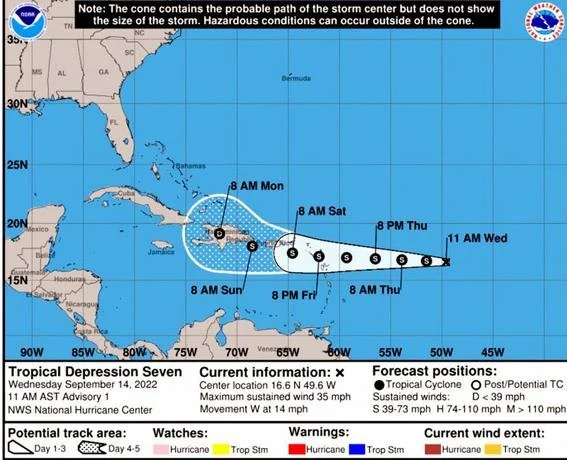
Fiona, which began as a tropical depression and is already a hurricane, has presented an “inconsistent” trajectory that has forced the agencies of the Dominican Republic and the entire region to maintain “strict” monitoring. Last Wednesday, the formation of the seventh tropical depression of the current hurricane season was announced.

At that time, the natural phenomenon registered maximum sustained winds of 55 km/h, with higher gusts.

The following day, it was upgraded to a tropical storm just when it was about 935 kilometers east of the Leeward Islands of the Lesser Antilles. Finally, around noon on Sunday, it became the third hurricane of the current hurricane season.

The official identification of the hurricane was confirmed based on the observations of a reconnaissance plane or hurricane hunter and data from the Doppler Radar of Puerto Rico, which were able to detect winds of 130 kph on the Saffir-Simpson hurricane intensity scale.

The hurricane winds extend some 45 km outside its center, and the storm winds extend some 220 km.

According to the projections and if it continues with its same movement, the center of Fiona would be located in the early hours of Monday morning between 10 and 30 kilometers northeast of Cabo Engaño.

For this reason, eastern provinces such as La Altagracia and El Seibo began to feel winds with hurricane and storm intensity at times, and which will gradually spread to other provinces such as Hato Mayor, Monte Plata, Samaná, Sánchez Ramírez, among others.

The Onamet maintains a hurricane warning from Punta Caucedo to Cabo Frances Viejo, a hurricane warning from Cabo Francés Viejo to Puerto Plata, and a tropical storm warning from the Barahona peninsula to Punta Caucedo.

ON POINT

Alert in the country.

The National Meteorological Office maintained last night a hurricane warning from Punta Caucedo to Cabo Frances Viejo, a hurricane warning from Cabo Frances Viejo to Puerto Plata, and a tropical storm warning from the Barahona peninsula to Punta Caucedo…

Onamet increases alert from Punta Palenque to Cabrera due to storm Fiona

Fiona’s heavy rains will hit the Dominican Republic on Sunday.

The National Meteorological Office (Onamet) increased this Friday the early weather alert for possible tropical storm conditions from Punta Palenque (San Cristóbal) to Cabo Engaño (La Altagracia) and from Cabo Engaño to Cabrera (María Trinidad Sánchez).

The previous weather alert issued yesterday afternoon and evening included the area from La Romana to Cabo Engaño and Cabo Engaño to Cabrera.

An early weather warning means that within 72 hours or less, one or two of the three effects of a tropical cyclone are possible in the areas under alert, such as heavy rains, storm force winds, and abnormal surf.

Alerts
The Emergency Operations Center (COE) issued an early green alert for four provinces given the possible incidence of tropical storm Fiona in the Dominican territory.

The provinces on green alert are Samaná, La Romana, La Altagracia, and María Trinidad Sánchez.

Fiona’s Trajectory
Fiona is located this Friday morning, about 425 kilometers east/southeast of the Leeward Islands (Lesser Antilles). Its maximum sustained winds are 85 kilometers per hour with higher gusts, and its current movement is westward at about 24 kilometers per hour.

According to Onamet, slight changes in its intensity are forecast for the next few days as it approaches the Dominican Republic.

Meanwhile, the U.S. National Hurricane Center reported in its Friday bulletin that tropical storm conditions are expected in the Leeward Islands within the warning area for tonight.

Heavy rainfall from Fiona will reach the Leeward Islands tonight, extending to the British and U.S. Virgin Islands and Puerto Rico on Saturday, reaching the Dominican Republic on Sunday and the Turks and Caicos Islands on Monday night or Tuesday.

The report indicates that Fiona is expected to move near the island of Hispaniola early next week.

This Friday
The Onamet indicated that this Friday dawns with mostly cloudy skies over locations in the southeast, northeast, and the Central Cordillera, such as in La Altagracia, El Seibo, La Romana, Hato Mayor, Monte Plata, San Pedro de Macorís, Santo Domingo, Samaná, Duarte, Sánchez Ramírez, among others, where the occurrence of local showers, isolated thundershowers and occasional gusts of wind, during the morning and evening hours, a product of the incidence of a trough in the high levels of the troposphere, is also expected.

On the Atlantic Coast, the Onamet recommended that operators of small and fragile boats navigate with caution without venturing out to sea from Cabo Engaño (La Altagracia) to Punta Mangles (Miches) due to abnormal swells.

Arajet makes history: first commercial flight to be launched in Barranquilla

The Dominican low-cost airline Arajet announced the start of its operations with direct flights connecting Santo Domingo with the Colombian cities of Barranquilla and Cali, to which other routes will be added soon.

The first commercial flight in the company’s history, which departed from Las Americas International Airport (AILA), landed at Ernesto Cortissoz Airport in Barranquilla, the main city of the Colombian Caribbean, and later at Alfonso Bonilla Aragon, in Cali, the largest city in the southwest, according to a press release from the airline.

“Arajet will also add the historic and emblematic city of Cartagena to its route network on September 18, and later on, Bogotá and Medellín. With these operations Arajet expects to serve five strategic cities in the country directly with Santo Domingo in the coming months,” they add.

Arajet’s president, Víctor Pacheco Méndez, said that the airline’s arrival in Colombia seeks to “strengthen commercial, tourism and cultural ties, as well as to promote economic development opportunities between the two countries.”

“International tourism in Colombia is going through a great moment and the arrival of new international airlines to the country is an indicator of confidence and positioning of our destinations, as well as the attributes associated with nature, culture and biodiversity,” said Gilberto Salcedo, vice-president of Tourism of the state agency ProColombia.

Arajet, which has a fleet of five state-of-the-art Boeing 737 MAX-8 aircraft configured for 185 passengers, expects to reach 20 destinations in 12 countries in the coming months, the information added.

According to the company, in the next few days, it will add new destinations in Peru, Mexico, Salvador, Aruba, St. Maarten, and Guatemala, as well as Toronto and Montreal (Canada).

Tropical depression under strict surveillance

Santo Domingo, DR
With maximum winds of 55 kilometers per hour (35 mph) and a trend of gradual strengthening, the newly formed seventh tropical depression of this 2022 hurricane season is developing. It has attracted the attention of meteorological agencies because of its chances of becoming a storm.

“As of this moment, we are strictly monitoring the movement and evolution of this tropical cyclone,” the National Meteorological Office (Onamet) announced through a report released yesterday afternoon.

Trajectory forecasts indicate that the system will continue to move westward and approach the Caribbean region over the next two days.

Consequently, they foresee a “progressive deterioration” in weather conditions for this weekend associated with the, so far, tropical depression.

Meanwhile, the U.S. National Hurricane Center (NHC) reported that the system is expected to move through the Leeward Islands and near the Virgin Islands and Puerto Rico on Friday night.

Humidity and wind

For this Thursday, Onamet forecasts that, although the influence of a drier air mass will remain over the Dominican forecast area, leading to generally sunny weather with limited rainfall activity over much of the country, patches of humidity associated with the wind are expected.