World tourism recovers

Santo Domingo, DR.
Economic events on the international scene seem to be a string of bad news. The words war, inflation, and recession are trending topics in all media, generating a collective pessimism that exacerbates the mental exhaustion that COVID left us with. But there is always something positive that can be highlighted, and one good news that the year 2022 brings us is the recovery of tourism worldwide.

According to the World Tourism Organization, in the first half of 2022, the number of tourists almost tripled what was registered at the beginning of 2021, well above what was initially expected. The Caribbean, Central America, and Southern Europe are the fastest recovering areas at the sub-regional level. This is excellent news, especially for the Caribbean, as they are the economy most dependent on the tourism industry.

Looking at the statistics of tourist arrivals in January-March 2022 and comparing it with the same period in 2019, the World Tourism Organization highlights the ten destinations registering the fastest recovery: St. Maarten, U.S. Virgin Islands, Ethiopia, San Marino, Andorra, Puerto Rico, Albania, Turks and Caicos Islands, Bulgaria and El Salvador. As can be seen, four of the top ten fastest recovering destinations are in the Caribbean.

Although the top 10 destinations of the World Tourism Organization mostly have small percentages of the global tourist flow, the same recovery is shown by the leading locations of the international sun and beach tourism. To cite some examples in different continents, Seychelles had a 10% increase in visitor arrivals when comparing May 2022 with May 2019, while the Balearic Islands have a higher number of tourist reservations this summer than those registered in the summer before the pandemic.

In the case of Cancun, in the first half of 2022, they received 10% more travelers than in the first half of 2019, explained mainly by the substantial increase in visits from U.S. tourists.

Another good news is that travelers are spending more than before, to the point that the average expenditure of the international tourist has increased from one thousand dollars in 2019 to more than one thousand four hundred dollars in 2021, and everything indicates that it will rise even more in this 2022.

The rapid recovery in tourism and the increase in travel spending is expected at the current juncture. During the pandemic, governments in developed countries passed generous tax breaks, but people spent little because they were confined to their homes. As a result, they accumulated significant savings that today, without restrictions, they are happy to spend enjoying the vacations they could not take during the most challenging months of 2020 and 2021.

The Dominican Republic has also been part of the wave of tourism recovery worldwide, with non-resident foreign arrivals during January-June 2022 that is just one hundred and eighty thousand tourists below what was recorded in January-June 2019. The positive performance of Dominican tourism has occurred despite the drop in Russian tourist arrivals due to the effect of Western sanctions.

On the other hand, the arrival of non-resident Dominicans to the country during 2022 has been impressive, to the point that in the first six months of the year, we received close to one hundred and fifty thousand more Dominicans than in the same period in 2019. Although these are not considered “international tourists,” their visit to the country represents a significant foreign exchange inflow to the Dominican economy.

Undoubtedly, the world will face complicated economic and geopolitical challenges in the future. But industries such as tourism teach us that there is always good news that helps us to maintain hope because, as the African clergyman Desmond Tutu said: “hope is the ability to see that there is light despite all the darkness.”

Dominican Central Bank: economic activity climbed 5.8% to June

Santo Domingo.- The Central Bank reported yesterday that the Monthly Indicator of Economic Activity (IMAE) registered a year-on-year expansion of 5.8% in June, higher than the 4.8% observed in May and the 4.7% in April 2022. With this result, it specified that the average growth of the IMAE corresponding to January-June of this year was 5.6% compared to the same semester of the previous year.
Regarding the behavior of domestic prices, the monthly variation of the Consumer Price Index (CPI) was 0.64% in June 2022, placing the year-on-year inflation measured from June 2021 to June 2022 at 9.48%.
“In the domestic sphere, the perspectives remain positive, forecasting an expansion of the gross domestic product (GDP) of 5.0%, a rate close to the potential, according to the forecast system of the Central Bank and in line with what is indicated by multilateral organizations such as the International Monetary Fund (IMF) and the World Bank,” reiterated the bank

Ninth tourist guide Discover Puerto Plata 2022 launched

The Association of Hotels, Restaurants and Tourism Enterprises of the North (Ashonorte) put into circulation the ninth edition of the official guide of the destination Puerto Plata: Discover Puerto Plata 2022.

In addition to highlighting the different attractions of the municipalities of the province of Puerto Plata, the guide also includes information related to the various tourism lines, such as Ecotourism, Health and Wellness Tourism, Real Estate Tourism, and Wedding Tourism.

It has a fresh and innovative design, an interactive map to guide tourists through the different attractions of the destination, and a QR code for easy access on electronic devices.

The direction, texts, and translation were carried out by Kathy Morillo, Executive Director of Ashonorte. In contrast, the production, editorial direction, and layout were under the responsibility of Createx POP, in the persons of Derissé de León, president, and Diomar González, director of Art.

It had the official sponsorship of the Ministry of Tourism (Mitur) and the Administrative Ministry of the Presidency.

It is recalled that Discover Puerto Plata is the official tourist guide of the destination and the primary tool to show the beauties and attractions of the province at all national and international tourism fairs.

It is recalled that Discover Puerto Plata is the official tourist guide of the destination and the primary tool to show the beauties and attractions of the province at all national and international tourism fairs.

It will be available digitally on the social networks Instagram and Facebook (@ashonorte) and ISSUU.com; and physically in the establishments of the members of Ashonorte and at Mitur.

The Dominican Republic received 735,064 thousand tourists in July, says David Collado

The Minister of Tourism, David Collado, informed that the Dominican Republic received 735,064 thousand non-resident visitors in July, making it the month of highest tourist arrivals in the country’s history, surpassing December 2021.

Collado indicated that this new achievement is projected to close the year by beating for the first time in history the figure of more than 7 million million million tourists, and said that with this July 2022, non-resident visitor arrivals represent 10% more than July 2018, 24% above July 2019 and 30% above the same month of 2021.

“We did it again. We achieved an extraordinary month in tourist arrivals to the Dominican Republic,” said Collado when referring to the record figure reached in July in visitor arrivals compared to the same month in previous years. “July 2022 becomes, together with December 2021, the only months in history in which we exceed 700,000 tourists in one month,” he added.

Minister Collado pointed out that, in addition to these 734 thousand visitors by air, another 98,389 cruise passengers arrived in the country in July and that cumulatively the country has more than 4 million 182 thousand tourists so far this year.

He affirmed that the arrival of these tourists last month directly impacted the economy since it represented 739 million dollars in foreign exchange contributions.

The United States continues to lead as a country of origin for tourists, followed by Canada, Colombia, Puerto Rico, Spain, Cuba, and the United Kingdom.

Minister Collado reiterated that this year would close with the arrival of more than 7 million tourists, “thus achieving the best tourism year in its history, thanks to the vision that has been implemented from the State by President Luis Abinader, as well as the cooperation of the private sector and all the collaborators of the ministry.”

Pro Consumidor says “no more warnings for JetBlue airline.”

Santo Domingo, DR.
The National Institute for the Protection of Consumer Rights (Pro Consumidor) warned through a publication on its social networks that it will no longer issue warnings to the airline JetBlue and will respond to all consumers according to the magnitude of the non-compliance.

The entity, which must protect the rights of consumers, expressed that the airline’s non-compliances have been reiterative, as well as the complaints and claims of consumers, and called on the latter to approach the entity.

“Pro Consumidor will not issue any more warnings to JetBlue Airlines,” said the entity in one of two publications. Pro Consumidor’s reaction is motivated by the constant complaints from Dominicans regarding the airline’s mistreatment.

Earlier this week, the president of the Chamber of Deputies, Alfredo Pacheco, criticized JetBlue for its behavior and “abuses” against Dominicans who travel with this company.

Pacheco recounted his inconvenience with the airline during a commercial flight to Puerto Rico last Saturday and how he observed that they only committed outrages against Dominicans, for which he asked the Dominican Government to cancel their license.

“They are abusers, the way they treat Dominicans, it’s a little creepy,” Pacheco began his story, he went on to say that he had to attend an activity in Puerto Rico, and they sent him the ticket with a flight for 2:00 in the afternoon and only at 5:30 in the afternoon did the plane take off.

The cost of inflation

Santo Domingo, DR.
There is no doubt: that inflation is the number one problem globally. Daughter of the pandemic, it was aggravated by the beginning of the conflict between Ukraine and Russia. Although many thought it would last for days or weeks, it has already completed five months of hostility, a humanitarian disaster with significant consequences for the West, through fuels and cereals. Add to that the already complicated supply chain picture.

This has impacted the margin of maneuver of the government of President Luis Abinader, pressured by a barrel of oil that has touched the $130 barrier and by inflation that has already exceeded double digits in many countries. However, fortunately, this is not our case. To get an idea, to prevent oil hikes from reaching the citizens’ pockets, the government has assumed the debt of the increases, absorbing, from January to June, almost 19 billion pesos.

Can you imagine for a moment not subsidizing fuels and letting society assume this? The answer to that assumption would have implied have affected the social peace and political stability of the Dominican Republic, which in turn would have impacted the economy, investments, job creation, and citizen security. Hence, this sacrifice has been well worth it. Nevertheless, with 19 billion subsidies, the margin for governmental achievements has been reduced, and the President has had to appeal for the permanent revision of public spending. For example, in recent days, salary increases and the hiring of new personnel were frozen, in addition to limitations on travel, extraordinary expenses, and everything extra for a context such as the current one, so that an economic surplus can be created to allow the allocation of all possible funds to prevent prices from skyrocketing and impacting the pockets of all Dominicans.

Without the global crisis, the country could have made progress in strategic works. For example, suppose we calculate that the cost per kilometer of highway or subway is US$ 447,000, considering the fuel and energy subsidies. In that case, the country could have today underway the construction of 80 more kilometers of subway line or its equivalent in highways.

Despite this, the government’s work is visible. On the social front, the president announced the allocation of a 1,500 peso subsidy for one million people, alleviating the overall economic burden that hangs over them. In addition, it was agreed to raise, through SENASA, from one to two million pesos per patient per year in case of catastrophic illness, a ceiling that had not been reviewed for years and which comes to lighten the enormous burden placed on a cancer patient or other condition. There has never been a more difficult time to govern.

During the pandemic, it was known that the economy would be hit. Still, never at the levels we have seen today, as a result of war conflicts which, although far from our shores, have had a direct impact, with an enormous cost in terms of inflation, which does not seem to dent the President’s will to move forward the country that trusted in his proposal two years ago.

Tourism focuses on strengthening the quality of services to cruise passengers in Puerto Plata

More than 90 actors that offer their services in the value chain of the tourism and cruise industry were trained to achieve excellence in the products they offer to cruise passengers on their tours and tours of each of the attractions of the province and the northern coast of the country.

The purpose of the workshop course: “Excellence in Service, WOW edition,” was to train the personnel in charge of each area that provides first-line services to cruise ship tourists with authentic experiences and quality service.

This workshop was coordinated by the Regional Tourism Office for Puerto Plata and the North Coast and was given by the facilitator and expert in tourism and the province, Ambra Attus, a representative in the country of Aquila, a leading company in training for destinations in the global cruise industry.

Also participating for the Ministry of Tourism (Mitur) were the Provincial director for Puerto Plata and the North Coast, Stephanie Kfouri, and Orfila Salazar, director of Cruises.

Kfouri assured that “we are committed to ensuring that tourists receive excellent services,” which is why the workshop will bring excellent results in the quality of the services that cruise passengers receive while living the experiences of the Puerto Plata destination.

On his side, Salazar thanked on behalf of the Minister of Tourism David Collado, the directors of the Ocean World water park, for opening the doors for the realization of the course and for receiving in its facilities almost a hundred participants.

He explained that the training initiative in the sector is part of the plans of Minister Collado to support the industry and because of the sustained growth, month after month, that the cruise industry has been showing in each of the tourist ports of the country.

He highlighted the great expectations for the country to continue its leadership in this sector with the beginning of the construction of a port for Samaná and the plans for a new terminal for Cabo Rojo, Pedernales.

Salazar also said that it is of great importance for the promotion and development of the industry that the city of Santo Domingo will host the 28th Annual Conference of the Florida-Caribbean Cruise Association FCCA from October 11 to 14.

The U.S. consolidates its position as the Dominican Republic’s largest tourist source with more than 50% of arrivals

“The goose that lays the golden eggs of Dominican tourism is the United States, and that has many reasons, the first of which is the proximity, the connection from the cultural point of view, the country’s ability to connect with the type of food they seek, the service they demand, and the Dominican connects very well with the American tourist, they feel very comfortable, there are many facilities, and there are no major cultural disparities.”

This was stated by the executive vice-president of Asonahores, Andres Marranzini. They revealed that the United States currently contributes more than 50% of the total number of tourists visiting the Dominican Republic.

“So there are many elements, but the main thing is the proximity, at the end of the day, from the East Coast we have flights from one hour 40 minutes to 4 hours and a half, and in that entire coastline there must be 100 million potential American visitors, and that continues to be our north, and we are doing very well, better than everyone in the Caribbean,” he clarified.

As for the European market, Marranzini said that the collapse of the euro against the U.S. dollar had not had a negative impact on the arrival of tourists from the European continent.

He explained that they have been monitoring the movement of the dollar-euro, and in the past, when the euro lost value against the US currency, European tourism decreased, but this has not been the case this time.

The business leader said that the Dominican Republic had received the volume of European tourists projected for the current year.

Towards the financial empowerment of Dominican women

Santo Domingo, DR
It has been proven that improving women’s access to credit promotes their economic empowerment and translates into savings and investment for their households, a fundamental equation for accelerating a country’s economic reactivation.

But women’s financial inclusion in the Dominican Republic still presents significant challenges. Currently, only 4.7% of registered MSMEs in the country are led by women. Overall, it is estimated that there is a credit gap for women of approximately 1.2 million dollars. Most of this corresponds to access to commercial credit: for every RD$100 owed by a man for commercial purposes, a woman had an honor of less than RD$36 at the end of 2020.

Despite all this, the country has experienced progress in access to other types of loans. Since 2013, the female consumer credit portfolio grew by nearly three percentage points to December 2020 (from 43% to 45.7%), according to the Superintendency of Banks. Mortgage loans, on the other hand, and according to the same source, show a reduction in the gender gap between 2013-2020 of 4.6 percentage points in favor of women, standing today at 49.9%.

A study by IFC and Banco BHD León revealed that one of the main barriers to the increase in credit is that financial institutions are unaware of the needs and behaviors of this market segment and therefore have limited capacity to devise channels and products that are adapted to them.

For women, their relationship with a financial institution must go beyond a disbursement; non-financial services play a decisive role: the institution that can provide tools to help them grow and develop as entrepreneurs have a greater chance of becoming more attractive offer and a long-term ally. To respond to this need, financial institutions, including banks and microfinance institutions, have to overcome some operational and regulatory challenges and adopt innovative strategies and solutions based on best practices around the world.

This evolution occurs in a global marketplace where women play an increasingly prominent role in business. An IFC report indicates that between 2012 and 2019, women in Latin America increased their participation in the economically active population (EAP) by 22%, compared to 8% for men. This trend is expected to continue over time. Therefore, facilitating access to financial services for women benefits the financial industry, generates more employment, and drives economic growth in the Dominican Republic and the region.

DR signs agreement to strengthen global supply chains

Santo Domingo.-The Dominican Republic, Panama and Costa Rica established a working group, through a memorandum of understanding signed between the United States and the ministers of Industry and Commerce of the member countries of the Alliance for Development in Democracy (ADD), to strengthen global supply chains.
This hand in hand with allies such as the United States and defined with strategic sectors that will meet periodically, seeking to actively integrate the private sector to encourage new investments and bring more manufacturing and logistics operations to our countries, in the context of nearshoring.
According to an institutional note, the signing of the Memorandum of Understanding (MOU) seeks to form projects of shared interest for economic reactivation, through the increase in trade flows, the attraction of new investments and the social and economic development of the region, appropriate market incentives, standardization, as well as capacity building and technical assistance, with the United States as a strategic partner in the effort.

Banco Popular 1st Dominican bank among world’s top 1,000

Santo Domingo.- The Banco Popular Dominicano reported that it remains the first Dominican bank in the list of the 1,000 best banks in the world, at a distance of 148 positions from its next closest Dominican peer in this index, compiled by the magazine The Banker, of the Financial Times publishing group.
The banking entity was ranked this year in position 783 of the classification, which evaluates banks from all continents taking as the main criterion their financial strength, measured through Tier 1 Capital, an indicator under the regulatory framework of the standards Basel, which indicates the bank’s ability to support its
In addition, the publication takes into account other criteria such as the size of assets and the return on them, profits before taxes or solvency and liquidity ratios, among other variables, explained the financial institution

ADETI highlights expansion of real estate tourism and its attraction of investments

Fifteen years ago, real estate tourism was not very well known in the Dominican Republic; it was not discussed so often. However, the fact that there is US$10 billion invested in the sector is a reason to mention it.

They are investments placed in different points of the national geography through the fifteen members of the Dominican Association of Tourism Real Estate Companies (ADETI). This private organization brings together the leading tourism real estate companies in the country, such as Cana Rock, Ciudad Destino Cap Cana, Costasur/Casa de Campo, Club Hemingway, Green One Playa Dorada, Grupo Puntacana, Grupo Velutini, Kaynoa, Metro Country Club, Playa Grande Golf & Ocean Club, Playa Nueva Romana, Puntarenas, Rincón Bay, Terra RD Partners (INICIA’s asset manager) and Tropicalia (Organización Cisneros).

In real estate tourism, foreign investment has been a critical element. For example, 70% of the investment in Cap Cana is American and Canadian; the other part is mixed, between European and Dominican.

“In the past two years, Dominican investment has increased, and that this has happened has an explanation, said the president of ADETI, Jorge Subero Medina.

He explained that “these are Dominicans who have come looking for a first home, or Dominicans who began to make different investments to make that home, for a foreigner to buy it. They have done it as developers, which means concretely that many Dominicans have become housing developers”.

He said that tourism is one of the pillars of the Dominican economy, and this has been evidenced in the current context of the world crisis (due to the covid-19 pandemic and then the Russia-Ukraine conflict); if one looks at the fact that in the country’s recovery, the sector has been of great significance concerning recovery, according to El Caribe.

“For example, in May the Monthly Indicator of Economic Activity registered a year-on-year growth of 4.8 %, for an accumulated variation of 5.6 % during the first five months of 2022, when compared to the same period of 2021. Seen in particular, hotels, bars and restaurants increased 35% (Central Bank data),” he added.

The also executive president of Cap Cana said that “this has been happening that within general tourism the contribution of real estate tourism has not been accurately measured, so ADETI, has begun to address the issue a bit, and wants to see it from the arrival of the tourist to the country and segmentation, which has not been done with breakdown yet.”

Concerning the documentation, Subero Medina informed that “this continues to worry the real estate tourism sector, and generates stress the fact of having to go, at least, eleven times to different institutions to obtain a permit for a real estate tourism project.”

“Depending on the lot, one has to go, for example, to Mensura Catastral, Registro de Títulos, City Hall, Ministry of Tourism (Mitur), Confotur, Obras Públicas, Ministry of Finance, Dirección General de Impuestos Internos (DGII), to Codia (if it is construction), and to see the part of the condominium regime,” he added.

The president of ADETI valued that very concrete steps have been taken in favor of the digitalization of the permits because this eliminates bureaucracy, avoids that people are putting their hands on the documents, and increases the deadlines. It raises them because it allows that even if an institution has closed at three o’clock in the afternoon, “you have the possibility of uploading a document until eleven fifty-nine o’clock at night.”

Lack of Russians impacts the Globalia hotel company in the Dominican Republic

The impact of the war in Ukraine continues to complicate the recovery plans of Be Live Hotels, which is why the Globalia Group intends to put aside the idea of putting the company up for sale and getting the business afloat. Still, the invasion of Putin’s troops is slowing down some key destinations.

This is the case in the Dominican Republic and Cuba, which notice a shortage of Russian and Ukrainian tourists in their establishments.

The company has nine hotels in the first of these destinations and six in the second. In other words, half of all its hotels are not performing as expected. However, Globalia is confident its offer in Spain, Portugal, and Morocco will continue.

Company sources assure Invertia that sales “are going very well” in these destinations and consider that “in autumn, things will normalize.”

The last statement contrasts with the possibility of Be Live resuming its sale process from September; the step back is not definitive since Juan José Hidalgo favors getting rid of the company after entering the scene of Cerverus and TPG two American investors that come on strong.

However, this would not happen until after the summer since, to date, the offers received do not convince Globalia. Some of those still interested plan to wait because they believe that the financial urgencies will provide them with a valuation more in line with their actual market price, which considers that many hotels need an excellent investment to refurbish them.

Dominican Republic would be the sixth largest economy in Latin America

The governor of the Central Bank of the Dominican Republic (BCRD), Héctor Valdez Albizu, revealed yesterday that “the nominal product would be at US$109,045.4 million in 2022 and would continue to grow until exceeding RD$120 billion in 2024, which would place the Dominican Republic, as stated by the IMF, as the seventh largest economy in Latin America.

Speaking at the XV International Congress of Finance and Auditing (CIFA), he said that this level of output, together with a modern and efficient liability management strategy by the Ministry of Finance aimed at reducing debt service and improving its sustainability, has contributed to the consolidated public sector debt falling from 69.1% of GDP in 2020 to 62.6% of GDP in 2021, projecting a level below 59.0% of GDP by the close of this year.

Nominal output expresses the monetary value of a country’s production of final demand goods and services.

The governor said that “despite the complex and uncertain environment that we have had to live in recent years, the Dominican economy maintains solid fundamentals and, on other occasions, will emerge stronger. I am confident that its dynamism will continue, generating more and better jobs for Dominicans, encouraging consumption and creating new investment opportunities.”

At the conference, he explained how the Dominican Republic designed and executed an effective strategy to face the international crisis on the health and economic front. In the second part of his speech, he pointed out the main aspects of the Dominican economic recovery and its prospects.

He highlighted that the inter-annual inflation was lower in May and June than in April. This behavior is expected to continue for the rest of the year so that inflation would converge to the Central Bank’s target range of 4.0 % ± 1.0 % during 2023.

On the other hand, according to the forecasting system that contains the different projection models of the BCRD and multilateral organizations, such as the IMF and the World Bank, the Dominican economy would grow by 5.0%, an expansion rate close to potential both in 2022 and 2023.

Valdez Albizu explained that the Dominican economy has kept growing.

Entities seek to turn Puerto Plata into a Bachata world epicenter

The Association of Hotels, Restaurants, and Tourist Companies of the North ( Ashonorte ) and the company ADN Films signed an agreement that formalizes a strategic alliance to turn Puerto Plata into a world epicenter of bachata.

In addition, promote it as an innovative film destination with music festival tourism to consolidate sustainable tourism development in the province.

The president of Ashonorte, Carlos Rodoli, stated that the institution’s commitment is to support, drive and promote high-impact initiatives for the tourism sector.

“Like the one we are carrying out today, embracing our cultural identity, the one that is generating millions of dollars and euros, activating tourism and the economy of distant cities that often do not speak our language, as in the case of Moscow, Paris, Shanghai, Brazil,” he said.

He also added that “Puerto Plata is the pioneer of tourism in the Dominican Republic, and with this agreement, we will be the pioneers in music festival tourism and in using bachata as a tool to promote the country.”

Meanwhile, the executive director of Ashonorte, Kathy Morillo, stressed that efforts would be unified to capitalize on the global impact of bachata, which has become the most visible element of Dominican cultural identity worldwide.

«This has been thanks to hundreds of schools, workshops, DJ instructors, singers, and bachata festivals in the main cities of the world, such as: Paris Bachata Festival, Shanghai Bachata Festival; I Love Bachata Mexico, Brazil Bachata Festival; Bachata Day (Italy), Europe Bachata Festival (Spain); Los Angeles Bachata Festival, Chicago Bachata Festival; San Francisco Bachata Festival, Istanbul Bachata Festival, among others,» he added.

On his side, the president of ADN Films, Víctor Minaya, said that “when the script for the film project “Marca País ADB Bachata” was written in 2018, Puerto Plata was incorporated into the shooting of the final part of the film in the amphitheater, recreating a world Bachata festival, and who would have thought that four years later we would be announcing that Puerto Plata will have the first world bachata festival in November, not as a movie, but as a reality».

He also stated, “We trust that with these two projects and other complementary initiatives, bachata will place the demarcation of Puerto Plata on the world map.”

During the event, held at the Senator Hotel, Rudi López, the dancer, DJ, and president of Island Touch, one of the main organizers of bachata events at an international level allied with ADN Films to enhance bachata as a country brand, will coordinate with the international bachata dancers in both events.

The event featured special guests with the participation of the world’s most famous and valued couple of bachata dancers, “Ataca & la Alemana,” who will join forces to turn Puerto Plata into the world epicenter of the popular rhythm.

Sunwing promotes recovery of Canadian tourism in Puerto Plata

The Sunwing Group maintains its firm commitment to Dominican tourism, promoting the arrival of Canadian tourists to Puerto Plata. As mentioned above, this vacation destination is gradually recovering the flow of visitors from the market.

To carry out the flights, the Civil Aviation Board (JAC) plenary session authorized the operations under the Special Permit modality to Sunwing Airlines. As a result, this company will operate fourteen round-trip flights on Tuesdays, with a frequency of one flight per week. It plans to offer approximately 5,292 passengers in Boeing 737-800 aircraft, with a capacity of 189 passengers.

The president of the JAC, José Marte Piantini, highlighted the importance for the Dominican Republic to promote the recovery of the Canadian market and, in particular, to promote the air transport of passengers to the province of Puerto Plata.

It should be noted that the Montreal – Puerto Plata – Quebec route is not included in any Operating Permit or Certificate of Economic Authorization. However, the airline operators Air Canada and Air Transat have the Montreal / Puerto Plata and Quebec / Puerto Plata routes, respectively.

According to data from the Statistics Section of the JAC, Sunwing Airlines mobilized from January 2021 to May 2022 a total of 256,265 passengers in 1,793 operations on the routes contained in its Operating Permit as well as on routes operated under other modalities.

From January-May 2022, the airline transported 171,508 passengers on its flights between the Dominican Republic and Canada.

Dominican exports continue to grow

Santo Domingo, DR
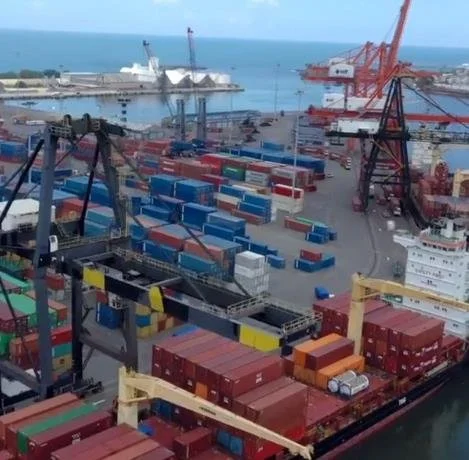
The Dominican Republic Export and Investment Center (ProDominicana) reported that merchandise exports reached a total of US$6,305.2 million during the January-June 2022 period, presenting an inter-annual growth of 10.7% concerning the same period of the previous year, 2021, and 29% concerning the pre-pandemic year 2019, according to preliminary customs records of the Directorate General of Customs (DGA).

Biviana Riveiro, executive director of ProDominicana, said, “The growth experienced by Dominican exports is the result of the strategic vision and alliances, under the framework of the National Export Promotion Plan, the Trade Promotion plan, and other initiatives.” The US market continues to be the leading export destination during the first half of 2022, accumulating a total of US$3.21 billion, equivalent to 51% of total exports. In terms of relevance, it is followed by Haiti with US$590 million and a 9.36% share, Switzerland with exports of US$525 million and an 8.33% share.

In turn, a total of 56 markets experienced positive growth in exports in the January-June 2022 semester. Of these markets, the United States stands out in the first position with an increase of US$297 million in addition to that exported during the previous month. Similarly, Haiti shows an absolute growth of US$139.3 million and China with an additional US$96.2 million in the same direction.

As in other periods, gold exports are in the first position with US$660 million during January-June 2022; this product is followed by international sales of cigars with US$509 million, and medical instruments and apparatuses are in third place with a total of US$479 million. The most exported agricultural products during this first semester were: bananas with US$106 million, cocoa beans with US$105 million, rum with US$65 million, and avocado with US$44 million.

“Among the products with the greatest dynamism, medical instruments and apparatuses stand out with the highest growth in the period January-June 2022, accumulating an absolute variation of US$116 million additional to those exported during the same period last year. Similarly, ferronickel is positioned among the products that lead the growth of Dominican exports in the period analyzed, representing a total of US$101 million additional to the previous year,” Riveiro emphasized.

In monthly terms, Dominican exports during June 2022 generated US$1,112.8 million, with a growth rate of 11.65% over the same month of the previous year. This growth is explained by free zone and national exports, which showed an inter-annual increase of 14.25% and 8.52%, respectively.

Riveiro highlighted that these results position June as the month with the highest value exported in the Dominican Republic, surpassing the historical record achieved in 2021 for this same month.

The executive director of ProDominicana pointed out that the institution maintains its enthusiasm and commitment to the promotion of exports and the attraction of foreign investment to the Dominican economy, considering them part of the essential pillars for the path of economic recovery, development, and the quality of life of Dominicans.

Trade restrictions exacerbate worst food crisis in a decade

Santo Domingo, DR.
The worst global food crisis in a decade was one of the main issues discussed at the twelfth ministerial meeting of the World Trade Organization (WTO) last month, according to an article published on the World Bank blog authored by Mari Elka Pangestu and Axel Van Trotsenburg.

The authors point out that this crisis is exacerbated by the growing number of countries that ban or restrict exports of wheat and other commodities in a misguided attempt to curb rising domestic prices.

They note that the price of wheat, an essential commodity in many developing countries, has risen 34% since Russia invaded Ukraine in late February, and prices of other foodstuffs have also increased.

They note that in response, as of early June, 34 countries had imposed restrictions on food and fertilizer exports, close to the 36 countries that used such controls during the 2008-2012 food crisis.

They indicate that these measures are counterproductive because they reduce global supplies, driving higher food prices. Other countries respond by imposing their restrictions, causing a growing cycle of trade actions that have a multiplier effect on prices.

They explain that measures to limit exports significantly affected food prices in the 2008 crisis, worsening the situation.

The publication notes that this time, the war in Ukraine is accelerating a price spike that began earlier due to unfavorable weather conditions in major producing countries, rapid economic recovery after the COVID-19-induced slump, and rising energy and fertilizer costs.

“The war has severely disrupted shipments from Ukraine, one of the world’s largest food suppliers. The country is also a major supplier of corn, barley and sunflower seeds, which are used to make cooking oil, products that cannot reach world markets because Ukraine’s ports are blocked,” the authors analyze, noting that export restrictions are not the only trade measures governments are taking in response to rising prices.

They argue that some countries are reducing tariffs or eliminating import restrictions. Chile, for example, increased duty discounts on wheat. “Normally, a permanent reduction in import restrictions would be welcomed. However, in a crisis, temporary reductions in import restrictions put upward pressure on food prices by boosting demand, just as export restrictions do by reducing supply,” they say.

Affected

The article states that among those most affected by trade restrictions (PDF) are developing economies in Africa, Asia, Latin America, and the Middle East. For example, Bangladesh imports 41% of its wheat from the Black Sea region. In the case of the Republic of Congo, the figure is 67% and 86% in the case of Lebanon.

He refers that given the magnitude of dependence, people in these countries are likely to be affected immediately, as alternative suppliers will not be available in the short term. “Higher prices will eventually incentivize major agricultural exporters to expand their production and replace part of the exports from the Black Sea region, but this will take time,” they point out.

Breaking with seasonality, Senator’s challenge in Puerto Plata

Alejandro Castillo, general manager of Senator Puerto Plata Spa Resort, told arecoa.com that one of the fundamental axes of his management of the hotel is to combat seasonality in the destination of Puerto Plata since the behavior of tourist arrivals is very different from that of any primary destination.

“The high season starts in December and ends in Easter and there is a big difference with the rest of the months, so the idea is that the occupancy month to month is similar as in the case of Punta Cana, since for example its average occupancy is 80 or 90% in December, and in July or August is at 75%, however here we go from 90% to 20 or 30% between May and June,” he explained.

He said that to improve the situation, they are seeking to open up to new markets so that the seasonality is not so marked in terms of the occupancy difference, and thus seeks that the renovated Senator Puerto Plata hotel, a premium brand, has a better positioning as well as the destination (North Coast).

In this regard, Castillo said that for Senator Hotels & Resorts, attracting new markets has always been a priority since they started the project in Puerto Plata, and he valued the Polish market, which has had a frequency of three flights a week.

“Although before the beginning of the current war in Europe, the Russian market also had a very positive impact,” he added.

As for the other markets, he said that the high season in Puerto Plata is very marked, with mainly Canadian tourists. “So it is important to continue working to bring new flights from Europe, countries like England, France, as well as new flights from the United States.”

For the current summer season, he detailed that its primary market is local. “This summer is comparable to the summer of 2019 and to date we already have higher occupancies.”

Dominican international airports report 58,763 operations

Santo Domingo.- The international airports of the Dominican Republic registered 58,763 air operations incoming and outgoing flights in the first half of this year 2022, a figure that represents a growth of 37% of operations compared to the first six months of the year 2021.

This was announced by the president of the Civil Aviation Board (JAC), José Ernesto Marte Piantini, at the conclusion of today’s ordinary plenary session of the institution.

Marte Piantini maintained that the movement of commercial aircraft in the first half of this year reached 15,986 flights more than the period January-June 2021, which represents an increase of 37% of the total air operations carried out in the same period last year, in which 42,777 operations of entry and exit to the Dominican territory were registered.

The president of the organization reported that flights to and from the Dominican Republic increased by 7,988 incoming operations and 7,998 outgoing operations compared to that period.