Posadas: “Our clients in Mexico are crazy to come to the DR”

IMG_5590.jpeg

 Replication of Live Aqua in Cancun is sought in Punta Cana.

 The Dominican Republic remains an attractive destination for tourism investors.


With the recent commitment of the Posadas Group, which is in charge of managing the Live Aqua Beach Resort Punta Cana, the hotel company hopes to entice tourists from their origin ( Mexico ) to visit more of the Dominican Republic as a tourist destination with their newly opened hotel.

This was explained to arecoa.com by Enrique Calderón, director of operations of Grupo Posadas, who also said that when the brand began to expand, he thought of the Caribbean because there is a lot of synergy between both nations.

For this reason, he stated that they are working to attract Mexican tourists since they understand that they do not visit the DR as they should. “We are solid in Mexico, and we aspire to create that bridge so that the arrival of Mexicans to the Dominican Republic can develop with more force.”

He indicated that obviously, they would not stop working with the American, European, Canadian, and South American markets. Still, they will put more emphasis on being attractive and creating facilities for tourists from Mexico.

“Of the Caribbean destinations, there are some highly positioned like Puerto Rico, Aruba and Curaçao that become aspirational, but when you arrive in the Dominican Republic, you realize that it is much more beautiful and attractive than what is said. The people, the food, the warmth, tradition, and others… makes it an extraordinary country, and all this should be known first-hand by Mexicans,” he added.

Calderón said that Grupo Posadas when relaunching its entire concept of resorts, was given the task of creating a concept that is only inclusive so that the Live Aqua in Cancun “has been very successful and emblematic that it has a community of frequent return visitors of more than 8,000 people,” and this is what they intend to replicate in the Dominican Republic.

“They (the tourists) are crazy to come here. The -aqua lover- (self-term of the lovers to the resorts in Cancun, Mexico) is a community of clients who stay three times a year in the hotel on average,” he pointed out.

The strength in the destination, he indicated, is what had maintained the confidence in investors and developers, since before the Covid-19 pandemic, the DR had the highest growth rate in tourism. All this indicates that the country is one of the most important for “us as operators who are looking for investors to take care of their business.”

Collado: “We will close February with the arrival of more than 100,000 tourists”

IMG_5588.jpeg


THE VALUE OF DOMESTIC TOURISM IN JOB RECOVERY STANDS OUT


The Minister of Tourism, David Collado, indicated that tourism is rising firmly in the country; an example of this is that in February, a month shaping up with a drop in tourist visits, they will conclude with more than 100,000 visitors.

All the decisions made by the Dominican government, he added, are considering tourism as the primary industry in the country, which represents 15% of the Gross Domestic Product ( GDP ).

Also, due to the importance of some 500,000 Dominicans making a living from this activity, the crisis has impacted an entire chain that includes small travel agencies and tour operators.

Among the measures adopted by the country, Collado cited insurance for COVID-19 coverage, being a pioneer in this initiative.

Likewise, the incentive of domestic tourism has allowed nearly 100,000 employees to regain their jobs in the different hotel complexes in the country.

Collado stressed that in the random tests carried out in all Dominican airports and, in hotels, with antigen tests for the North American market, the positivity rate does not exceed 1.20%, so tourism does not represent a risk to increase contagion.

Abinader: Dominican Republic has recovered more than 100,000 tourism jobs

IMG_5587.jpeg

THE PRESIDENT INAUGURATED A STRETCH OF HIGHWAY THAT WILL BOOST TOURISM IN SAMANÁ


 Government develops more than 40 projects in various tourist centers.

 Public initiatives promote the reactivation of Dominican tourism.


The President of the Republic, Luis Abinader, affirmed that more than 100,000 people have recovered their jobs in the tourism sector and that by February it will reach 200,000.

The head of state gave the information during the inauguration of the El Limón-Plata Morón highway’s rehabilitation in Samaná.

It involves the road reconstruction of the El Limón- Agua Sabrosa- Playa Morón- Punta Lanza del Norte accesses, with a length of 6.2 kilometers and an approximate cost 121.3 million pesos.

The work, started and completed in less than six months, is located in El Limón, Las Terrenasmunicipality, in Samaná and was built by the Ministry of Tourism ( Mitur ) through the Executive Committee of Infrastructure for Tourist Zones ( Ceiztur ).

The president, who the first lady, Raquel Arbaje, accompanied,  also highlighted the incredible potential of our country and the willingness of the Government to maximize it.

“We have the best beaches on the planet. We already know it, and now we are determined that everyone also knows it,” added Abinader, highlighting the country’s potential.

Meanwhile, the Minister of Tourism, David Collado, said they are focused on creating the necessary infrastructures to be “much stronger” when normality is restored in the face of the Covid-19 pandemic.

It was highlighted that the work would have “a great impact” on the tourist development of El Limón, allowing the use of Morón beach and will contribute to job opportunities.

At the event were Pedro Catrain, senator for Samaná; Neney Cabrera, Minister of Special Programs and Strategic Projects of the Presidency; Igor David Rodríguez, Administrative Deputy Minister; and Fernando Mercado, mayor of the municipal district of El Limón.

Also present were, Elsa de León, governor of Samaná; Sixto Brea, director of the Executive Committee of Ceiztur; Juan Carlos Torres Robiou, director of the Specialized Body for Tourist Security ( Cestur ); Jesús Durán, president of the Samaná Tourism Cluster; Deligne Ascencion Burgos, Minister of Public Works; Rafael Blanco Tejera, president of the Association of Hotels and Restaurants ( Asonahores ), among others.

Norwegian delays the resumption of its cruises until June

IMG_5576.jpeg

The cruise company Norwegian announced last Tuesday a new extension of the suspension of its three brands, now until May 31, 2021, one more month than the date established in January, due to the coronavirus pandemic.

According to a released statement, the company continues to work on its service resumption plan to comply with the requirements of the Framework for the Conditional Navigation Order of the US Centers for Disease Control and Prevention ( CDC, in English).

For this reason, all Norwegian Cruise Line, Oceania Cruises, and Regent Seven Seas Cruises voyages with embarkation dates up to May 31 are suspended.

On January 18, the company had extended the suspension until April 30. In December, it had done so until March 31, practically the same steps as the rest of the companies in the sector, which is one of the most affected by the pandemic, first because of the high incidence of infections and then because of the preventive measures that require keeping ships in port.

As it did in January, Norwegian indicated that it continues to work with global and national health authorities and its panel of experts to take appropriate measures to protect the crew, passengers, and port populations that visit its ships.

The CDC established last October to resume their trips from ports in this country; companies must comply with the Conditional Navigation Order requirements.

Said order makes it necessary for the companies “to take adequate measures for the health and safety of the crew while increasing the capacity of their laboratories to test future passengers.”

The Dominican Republic is a tourism management model amid Covid

IMG_5544.jpeg

Santo Domingo, DR

The secretary-general of the World Tourism Organization, Zurab Pololikashvili, assured yesterday that the Dominican Republic is prepared to receive tourists because of its sanitary protocol, security, and infrastructure.

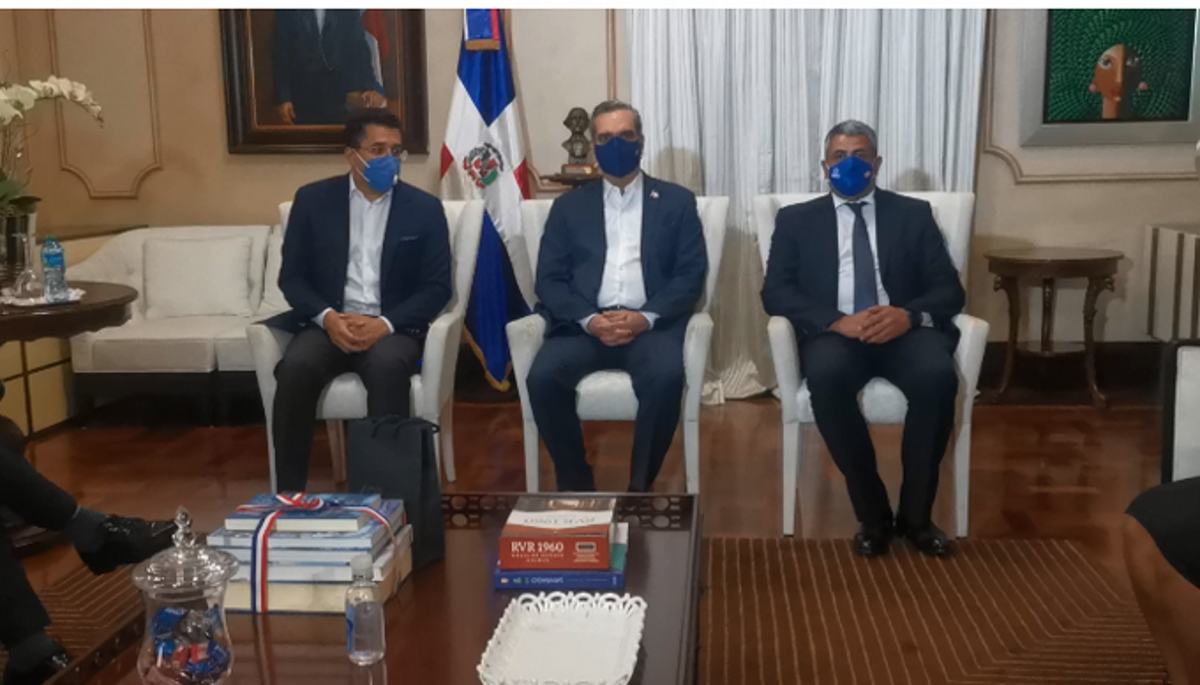
Zurab, who chose the country to spend his first family vacation since the beginning of the pandemic, paid a courtesy visit to President Luis Abinader on his last day, Wednesday morning.

At the end of the meeting, which was held in private and at which Tourism Minister David Collado was present, the secretary affirmed that the country is an example in the world of how tourism can be managed with responsible protocols in the COVID-19 era, working to attract international tourists with sanitary safety.

He considered Abinader to be the president with some of the best ideas he has seen in recent years to lead the tourism industry, attract more visitors, investments, create new destinations, and generate more jobs. “There is no better place to invest than this paradise. A legally safe country, with a government, motivated to carry out interesting, creative, modern, and sustainable projects,” Pololikashvili said.

He congratulated the Dominican government for managing tourism after recognizing that it is not easy to maintain the balance between health and economy amid the pandemic.

Among the qualities for choosing the Republic, he valued its history, its culture, and above all, for its security.

“We have seen with our own eyes that it is a safe country, which complies with all the protocols of the world that are needed in these rare and difficult times,” added the UNWTO leader.

During his stay in the country, he said that thanks to the rigorous sanitary protocols, he could see that it is safer than being at home or going to the supermarket.

He also highlighted the beauty and hospitality of the Dominican Republic since his arrival in Punta Cana.

He understands that it is possible to travel responsibly and that not traveling is not the solution to avoid the pandemic, so he urged to travel and enjoy the world.

Abinader receives a visit from the secretary of the World Tourism Organization

IMG_5510.png

Santo Domingo, DR

President Luis Abinader received this Wednesday the secretary-general of the World Tourism Organization (UNWTO), Zurab Pololikashvili, at the National Palace.

The meeting, which was held privately, was attended by the Minister of Tourism, David Collado.

Pololikashvili chose the Dominican Republic to spend his personal vacations, so he has been in the country for several days.

Collado posted last Sunday on his Twitter account a message in which he stressed that the visit of the secretary of the UNWTO is a sign of confidence in the sanitary measures adopted by the Dominican authorities against the pandemic.

“It is an honor for us to have in the country the president of the World Tourism Organization, on his personal vacation, a clear sign of international confidence in the sanitary protocols of our country for tourists,” wrote the Minister.

“The Dominican Republic is a world example of how pandemic tourism can be safely managed”

IMG_5509.jpeg

Santo Domingo.- The Secretary-General of the World Tourism Organization, Zurab Pololikashvili, affirmed this Wednesday that the Dominican Republic is an example in the world of how tourism can be managed with responsible protocols in the time of COVID-19 managing to attract international tourists with health security.

As a sign of confidence in Dominican tourism, Pololikashvili is vacationing in the country with his family. He took the opportunity to visit President Luis Abinader on his last day of rest.

After the conversation with President Abinader at the National Palace, Pololikashvili, accompanied by the Minister of Tourism, David Collado, said that the country is prepared to receive tourists with its health protocol, equipment, security, and infrastructure.
He considered that Abinader is the president with some of the best ideas he has seen in recent years to lead tourism, attract more tourists, investments, create new destinations and generate more jobs.

“There is no better place to invest than this paradise. A legally safe country, with a government, motivated to carry out interesting, creative, modern, and sustainable projects, ”said Pololikashvili.

He congratulated the Dominican government for managing tourism after acknowledging that it is not easy to maintain a balance between health and the economy.

Among the qualities to choose the Dominican Republic for his first family vacation amid the pandemic, he valued its history, culture, and above all, for its safety.

“We have seen with our own eyes that it is a safe country, that it complies with all the protocols in the world that are needed in these rare and difficult times,” added the UNWTO leader.

During his stay in the country, he said that thanks to the rigorous health protocols, he confirmed that it is safer than being at home or going to the supermarket. Also, he highlighted the beauty and hospitality of the Dominican Republic since his arrival in Punta Cana. He understands that traveling is possible in a responsible way and that not traveling is not the solution to avoid the pandemic, so he urged to travel and enjoy the world.

He stressed that in the history of tourism, there is no crisis as intense as that caused by COVID-19.
Due to its successful experience in the management of COVID-19, the Dominican Republic can serve to hold a summit of leaders in the region to host good practices that promote tourism.

They accompanied Pololikashvil, his son Nikoloz Pololikashvili, Bernardo Castillo, advisor to the Minister of Transport of Spain, and George Shamdze.

“That the secretary-general of the World Tourism Organization chooses this destination is another accolade that we are doing things differently and very well,” said the Minister of Tourism.

Collado pointed out that the Abinader government works hand in hand with international organizations and the private sector, which is why confidence in tourism has recovered.

He said that in February, which was shaping up with a drop in tourist visits, they would conclude with more than 100,000 visitors, indicating that tourism is rising firmly.

All the decisions made by the Dominican government, he added, are considering tourism as the primary industry in the country, which represents 15% of the Gross Domestic Product (GDP).

Also, due to the importance of some 500,000 Dominicans making a living from this activity, the crisis has impacted an entire chain that includes small travel agencies and tour operators.

Among the measures adopted by the country, Collado cited insurance for COVID-19 coverage, being a pioneer in this initiative.
Likewise, the incentive of domestic tourism has allowed nearly 100,000 employees to regain their jobs in the various hotel complexes in the country.

Collado stressed that in the random tests carried out in all Dominican airports and, in hotels, with antigen tests for the North American market, the positivity rate does not exceed 1.20%, so tourism does not represent a risk to increase contagion.

President will make Colonial City LatAm’s best

IMG_5507.jpeg

Santo Domingo.- President, Luis Abinader on Tue. said the Colonial City will be made the best in Latin America.

“The time for the Colonial Zone has arrived; With the experience of David, with the mayor Carolina Mejía, with the support of the IDB (Interamerican Development Bank) and the support of the Government, we are going to make this the best Colonial City in all of Latin America,” he said.

The president toured the “Zone,” where Tourism Minister David Collado said the country’s goal is to go from one million tourists who visited Santo Domingo last year to 1.5 million this year.

AILA: anticovid tests are no longer “problems” for travelers

IMG_5502.jpeg

The Aeropuertos Dominicanos Siglo XXI (Aerodom) reported that about 250 rapid tests were performed daily last Friday on passengers traveling to the United States and Spain from the International Airport of Las Americas (AILA).

Luis José López, director of Communications of Aerodom, indicated that many travelers were unable to travel at the beginning of the restriction measures because they did not have the negative test document, but that this is no longer happening because few people at the airport are requesting the service.

“The issue of the tests at the airport is no longer a problem; passengers have become aware that they have to come to the airport with their anti-covid-19 test previously done to be able to board the planes,” he said.

It is recalled that last January 26, the United States government established that all international travelers of two years or more had to present a negative Covid-19 test as a requirement to be able to enter its territory.

With the entry into force of these measures, according to Listin Diario, more than a thousand travelers who had reservations in the regular flights of the various airlines with a destination in the United States could not travel because they could not present in writing the result of the tests.

However, as the days have gone by, the situation tends to normalize because the passengers themselves have become aware that they have to present themselves at the airport with a negative test.

The passengers who left for the United States with a negative antigen test in the last days did so on commercial flights of JetBlue Airways, American Airlines, Delta, United Airlines, and Spirit Airlines.


Dominican Republic rolls out vaccination push today

IMG_5501.jpeg

Santo Domingo.-  After reaching a consensus with the different unions in the health sector, the Government will present Monday, starting at 10am, with all its details, the National Vaccination Plan, which it estimates to vaccinate around 7.8 million people before December.

The Health Cabinet formally presented the plan this Sunday to the Dominican Medical College (CMD) and to the nursing unions, which believe that President Luis Abinader is in the best position to carry out a vaccination plan for the entire population.

The Health Cabinet, under the coordination of Vice President Raquel Peña, assured that the plan is ready to be executed for the benefit of the population.

“As soon as the vaccines agreed with the different pharmaceutical companies arrive and all the mechanisms are ready, the population will be receiving the corresponding doses in a timely manner, therefore, the collaboration and participation of all health personnel and society is of the utmost importance.”

OPINION February 12, 2021 | 9:08 amA new US initiative for the Caribbean is needed

IMG_5493.jpeg

The View from Europe

David Jessop, Dominican Today senior Op-Ed contributor

When the economies of the Caribbean and Central America finally exit the pandemic, most will be in crisis. As a recent IMF review of The Bahamas put it, recovery to pre-pandemic levels ‘will likely take years’ and the ‘downside risks loom large’.

The same prognosis is expected to apply to virtually every nation in the region other than those with newfound oil and mineral reserves. So much so that the IMF suggests it will be as late as 2023 when output recovers, and 2025 when per capita GDP rebounds and pre-pandemic levels of employment, production, and the revenues necessary to underwrite social provision are restored.

In response, some in the region have called for a modern equivalent of the 1948 Marshall Plan which saw the US transfer billions of government dollars to Western Europe to support post war recovery, and as a bulwark against the then Soviet Union.

In some respects, the parallels are close – the Caribbean and Central America form a vital element of US national security – but in others, they are not, as today most western governments regard the private sector as the principal driver of sustainable growth.

President Biden recently indicated that he intends “rebuilding the muscle” of Washington’s democratic alliances and intends finding common solutions to common problems.

“There’s no longer a bright line between foreign and domestic policy”…. “the US cannot afford to be absent any longer on the world stage”, he told US diplomats in a speech at the State Department. “When we invest in economic development of countries, we create new markets for our products and reduce the likelihood of instability, violence, and mass migrations”.

In the coming months, these themes will be fleshed out in an hemispheric context. Already, Washington’s think tanks and lobbyists are seeking to inform the policy announcements that are expected to be made at April’s virtual Summit of the Americas. Governments in the Caribbean and Central America, close to the new administration are also making suggestions.

What is missing is the voice of private sector leaders in the Caribbean, Central America, and the US who in the real world will have to drive post pandemic economic recovery.

Put bluntly, this is the moment when influential private sector leaders from the region and the US should be doing more. They need to make their voice heard by the legislative and executive branches of the US government and ensue that there is substantive Caribbean participation in the CEO summit that will accompany the US-led government encounter.

Unfortunately, having the regions corporate voice heard in a sustained manner is no longer straightforward. There is no obvious private sector led institution in Washington related exclusively promoting a hands-on Caribbean and Central American agenda.

In the 1980s, the US-Caribbean Basin private sector relationship was catalysed by Caribbean Central American Action (CCAA). At the time, President Carter and then President Reagan had come to recognise that a part of the answer to their security concerns lay in stimulating regional economic development and creating new employment. Both administrations understood that if this were to happen, business leaders had to be involved.

Responding, CCAA brought together and took to the White House small groups of US and regional business leaders and with their support went on to significantly influence US policy though ideas, initiatives, events such as the annual Miami conference, and regional dialogues that promoted practical  solutions that governments, agencies and institutions were able to support.

In the US it resulted in the shaping of the Caribbean Basin Initiative and then the legislating of the Caribbean Basin Economic Recovery Act, while in Europe near parallel representations by key Caribbean sector actors influenced the negotiation of pathways out of preference and the creation of treaties and agreements that provided private sector related support.

Despite CCAA being no more and the world being very different, those who fashioned these original private sector initiatives believe this is the moment when a new private sector led post-pandemic initiative with its genesis in the region is required.

“There needs to be a coming together of the best private sector leaders from all sides. The Caribbean and Central America must build its own advocacy and constituency in Washington, but the impulse must first come from the region”, Peter Johnson,  CCAA’s first Executive Director recently told me.

He feels that recovery from the pandemic poses many of the same problems, and that a small high-level group of private sector leaders from the Caribbean and Central America should be meeting now with their US counterparts.

Developing a 21st century US initiative for the Caribbean Basin “will take vision and courage”, he says, and will need new players with an interest in positive economic outcomes for the region. He also advocates involving the US Congressional Caucus on the Caribbean, based on its strong diaspora ties.

In the past, when corporate leadership was largely exercised across the Caribbean and Central America  by family-controlled businesses, the value of investing time and resource in strategic lobbying was more easily achieved. Today, finding champions is less easy when for the most part, especially during a pandemic, corporate boards are reluctant to authorise such activity.

That said, it is not hard to identify individuals among today’s Caribbean and Central American private sector leaders who are thoughtful, successful, outward looking, run businesses that are invested in the US, the region and elsewhere, understand the value of lobbying, and have close contact with legislators of regional heritage in the US Congress.

What is so far missing and now much needed is a well-connected US private sector leader and a convener who understand the importance of the mutually reinforcing economic relations. That is, someone with political reach who can explain how a new business related initiative for the Caribbean and Central America might address both growth, investment, trade and employment and the Biden Administration’s wider concerns about migration, global warming, security, and US domestic economic recovery.

David Jessop is a consultant to the Caribbean Council and can be contacted at

david.jessop@caribbean-council.org

Previous columns can be found at https://www.caribbean-council.org/research-analysis/

February 12th, 2021

US airlines will expand their routes to the Dominican Republic

IMG_5492.jpeg

The routes will be to El Catey, in Samaná, Miami-Punta Cana and Orlando-Punta Cana


Three North American airlines were granted permits to expand new routes between cities in the United States and the Dominican Republic, which are from Charlotte, in North Carolina, to El Catey, in Samaná, Orlando-Punta Cana, and Miami-Punta Cana.

The aviation companies are established in the country and were granted amendments to their contracts for the expansion, among them American Airlines, which for the first time will carry out direct flights between the tourist area of ​​Samaná and the United States, according to the request report from an operating permit issued by the North American franchise to the JAC Civil Aviation Board.

With the permission to operate route number 3, American Airlines will be able to make the route from Charlotte, in North Carolina, United States, a city where hundreds of Dominicans reside who will use it to come to the country.

American Airlines flights between the United States and Samaná will begin on June 5, where they will have a frequency of two flights per week from Charlotte to El Catey and vice versa, to complete four operations using Embraer aircraft capacity for 76 passengers.

José Marte Piantini, president of the JAC, said that little by little, the Dominican Republic is regaining its leadership as a tourist destination in the Caribbean.

He said that the US airlines Frontier, Spirit, and American Airlines requested to expand their air operations permits to increase their frequencies.

He said that during the celebration of the ordinary meeting of the JAC, held this Wednesday, February 10, the members of the plenary were aware of the requests of the North American airlines that, despite market restrictions, continue to trust the Dominican Republic as a tourist destination and they want to invest in expanding their travel offers.

Advancement in detail that Frontier Airlines requested the amendment of its operating permit number 88, to add the Miami-Punta Cana route, with capacity for 186 passengers performing two flight operations, Monday and Friday from March 2021.

Spirit Airlines also required the amendment of its operating permit number 48 to include the Orlando-Punta Cana route, with 182 seats, three frequencies a week and will begin on February 4, 2021.

The Tortuga Bay Puntacana remains one of the best hotels in the Caribbean

IMG_5490.jpeg

For the third consecutive year, the Tortuga Bay Puntacana Resort & Club hotel received a gold badge in the ranking of the best hotels in the Caribbean in 2021, a recognition granted by the international magazine US News, which on this occasion placed the hotel in step number 7 among the best hotels in the Caribbean.

“The travel industry has faced numerous challenges over the past year, emphasizing the need to support and recognize hotels that continue to maintain exemplary standards,” said Zach Watson, US News Travel Editor.

“This year’s list offers a reliable guide for travelers to use when planning their next getaway, whether in a few months or next year,” he added.

US News & World Report is the world’s leading magazine in quality classification. It is visited by more than 40 million people monthly, allowing through the web to search for information and guidance to make the best decisions in the areas included in the magazine, such as travel and business.

Tortuga Bay Puntacana Resort & Club works to follow the measures and recommendations of the World Health Organization ( WHO ), the Center for Disease Control (CDC), World Travel & Tourism Council ( WTTC ), the National Association of Hotels and Restaurants ( Asonahores ), the Ministry of Tourism ( Mitur ) and the Ministry of Public Health of the Dominican Republic. In addition to the standards received from Leading Hotels of The World, in combination with Grupo Puntacana’s procedures and protocols.

In 2019, the hotel was selected as the number one hotel in Punta Cana by US News & World Report receiving the organization’s gold seal. In 2020, he held the position and at the same time received the gold seal for his number four position in the Caribbean Region by US News & World Report.

Restrictions in Canada force Air Transat to close Caribbean flights

IMG_5489.jpeg

The Canadian government urges Canadian airlines to halt flights to popular vacation destinations to protect its population from mutations of the virus. This is why Air Transat is being forced to take drastic consequences: with immediate effect, the airline will entirely suspend its scheduled flights to Mexico and the Caribbean until April 30.

International flights will only be possible through Air Transat airports, and also, the government is encouraging airlines to stop flying to popular vacation destinations.

The airline will operate return flights only until February 13. In the meantime, passengers booked on flights from February 14 to April 30 will be rebooked by the airline on alternative flights. This is to ensure safe arrival in Canada.

“We are taking the actions requested by the Canadian government. This prompts us to suspend all our flights, including to Europe,” the airline said.

Jean-Marc Eustach, the airline’s president and CEO, announced the end of Air Transat’s operations. Last Friday, the airlines agreed to suspend all flights to Mexico and the Caribbean until the end of April.

In general, the suspension of flights will affect many parts of Europe, the Caribbean, and Latin America. In the Caribbean, for example, flights to Cuba, Jamaica, or the Dominican Republic are affected. In Mexico, the airline operates in the popular vacation destinations of Acapulco and Cancun.

Grupo Posadas: “Having 10 hotels in the Dominican Republic continues to be our priority”

IMG_5488.jpeg

 “We do not rule out having city hotels in the DR as well.”

 They plan to open the Grand Fiesta Americana Punta Cana in 2024


Enrique Calderón, COO of Grupo Posadas, confirmed to arecoa.com that they are moving forward to have ten hotel establishments in the Dominican Republic.

“If we would like to reach the goal, we want to have ten properties in the country because we have brands that make growth very possible, both in cities and resorts. We would love to have ten resorts, but we do not rule out having city hotels as well,” he added.

The executive of the Mexican tourism group stated that in this sense, they are contemplating having a hotel in Santo Domingo. “We are open and exploring and see how everything evolves; it has not ceased to be a priority (despite the pandemic) to have ten hotels in the DR,” he stressed.

To this end, the hotel group is on track. It already has the Live Aqua Resorts Punta Cana and will resume construction of the Grand Fiesta Americana Punta Cana, which was paralyzed by the pandemic by 2021.

Calderón explained to this tourism digital that if the plans continue, after overcoming the incidence of Covid-19, the hotel, which involves an investment of US$ 130 million, would be opening its doors in 2024.

Going to the USA? Find out how entry works now

IMG_5487.jpeg

Santo Domingo, DR

After 14 days of quarantine, Francis Javier returned to work yesterday after leaving the Dominican Republic for New York, where he resides. He arrived in the Big Apple on January 22 to avoid the measure that requires him to present a Covid-19 test with negative results, which came into effect on the 26th of last month. This did not free him from home confinement.

Something similar happened to Roque Leonel, an immigration expert who traveled to New Jersey to undergo medical check-ups. Although he was not asked for the physical test because he had already registered the result online, the doctor who was to consult him could not see him personally because the suggestion in that state was to last 14 days in quarantine. “I had to see him virtually because my stay was only from January 26 to 31, and I did not have the time to comply with that measure.”

However, others who have traveled to New York with a negative test result for Covid-19 have not had to keep it. Omar Benito is one of those favored. He traveled from the Dominican Republic to New York last Saturday, January 30. He presented his test with favorable results, and nothing more was asked of him. “I went home the same as always, and I try to use my mask, distancing and everything you have to do to take care of yourself,” says the Dominican resident in New York.

Despite all this, it must be remembered that by orders of the President of the United States, Joe Biden, everyone who enters this territory must present a negative coronavirus test and comply with quarantine upon arrival.

The measure is part of the government’s work plan to curb the pandemic in the country, where the virus has claimed the lives of more than 400,000 people.

In response, the U.S. Centers for Disease Control and Prevention (CDC) recommends that travelers get tested three to five days after travel and stay home or complete a voluntary quarantine elsewhere for seven days after travel.

Even if their test result is negative, the suggestion is to stay in confinement. They always advise to follow recommendations and abide by state and local requirements related to travel.

Other testimonials

The same thing that happened to Francis happened to Carmen Ramirez. She arrived in New Jersey before January 26 and had to spend 14 days at home. Her brother traveled after this date and, when he presented the Covid free trial, he was only told to stay a few days at home voluntarily. He did so and has now returned to work.

From Miami

Andy Estevez traveled from Florida to New York, where he resides. He did it before January 26th. He had to fill out a form with his name, address, and telephone number… “Every day, they sent me a text message to see if I was at home. I lasted 14 days in quarantine, and after I complied, I went on with my normal life. I found out that now it’s less [sic] days, I think 10.”

Recommendations provided by Roque Leonel

1- Fill out the Dominican immigration form online.

2- If you have dual citizenship, travel with both passports (you will save half an hour in line).

3- Take the COVID PCR test 72 hours before the flight (not on the day of travel).

4- If you are going to NY, fill out the form online before traveling, and you will save an hour in line at JFK. Remember that you must quarantine, but if you take the PCR test three days after arriving in NY and it is negative, you will be exempted from quarantine.

Dominican Republic promotes hotel reopening to maintain tourism jobs

IMG_5452.jpeg

The Dominican government and the Dominican Association of Hotels and Tourism (Asonahores) maintain exceptional support to the hotel sector, aiming that the chains based in the country can resume their operations and keep afloat the tourism jobs, which represent more than 500,000 in the DR.

Luis Abinader’s support to the hotel industry has allowed hotel brands such as AMResorts, Bahia Principe, Meliá Hotels, Iberostar, among others, to have significantly advanced the reopening of all their establishments in the country, with some brands currently having fewer than two hotels to open to complete their operational inventory in the country.

According to the president of Asonahores, Rafael Blanco Tejera, the entity he presides is trying to support all the hotel chains to keep their operations open, since “for us, it is important to maintain jobs and productive chains,” he said.

Blanco Tejera assured that the public and private sectors are working together to guarantee the country’s tourism sector’s recovery.

He said that they are communicating with all tourist issuing countries to work together to strengthen the tourist flow.

“We are working because we understand that this situation will pass. The tourism sector is present and will be ready to make the necessary contributions to the Dominican economy,” he said according to Hoy.

Faced with the new covid-19 strain and the closure of some countries due to outbreaks, Blanco limited himself to pointing out that they are working with the Ministry of Public Health (MSP) and international organizations.

He also assured that hotel occupancy is strengthened because they promote a strategy of domestic tourism and the responsible opening of the sector in the country.

Ferries del Caribe resumes passenger travel between Dominican Republic and Puerto Rico

IMG_5446.jpeg

Ferries del Caribe reported that it resumed its passenger trips between the Dominican Republic and Puerto Rico as of last Monday, February 1.

The company assured that “all health and safety protocols will be maintained” for the well-being of guests, crew members and their employees.

To enter the Dominican Republic, as of Monday, the General Directorate of Migration (DGM) requires the digitally completed entry and exit form for residents and foreigners. The physical forms that were filled out at the port will no longer be valid. At the time of registration, the system will generate a code that you must present at the port of the Dominican Republic.

Since Puerto Rico is a free state associated with the United States, passengers with the intention of entering that island have to present a negative COVID-19 test (PCR or antigens), carried out less than 72 hours prior to their trip.

Before disembarking in Puerto Rico, you must complete the COVID-19 Alert Traveler Declaration form.

Suspended flights increase due to heavy snowstorm in the US

IMG_5445.jpeg

The number of flights suspended to and from various parts of the United States increased this Tuesday to 28 due to the heavy snowstorm that has hit a large part of the North American territory for several days.

As a consequence of the cancellation of flights to and from New York, Boston, New Jersey, Neward, Atlanta, Georgia, and other US locations, more than 21,000 passengers have been affected, being stranded at airports.

The Communications and Press Management of Dominican Airports Siglo XXI (Aerodom) indicates that 26 of the flights were projected for departure and arrival at different times this Tuesday from the terminal of the International Airport of the Americas (AILA) and 2 to Gregorio Luperón.

He added that 13 of the canceled flights correspond to the Jet Blue airline, 8 to Delta Airlines, and 5 to United Airlines, all on the routes mentioned above, according to the reports provided by the Communication Management of the Aerodom Company.

According to the information, the two flights canceled today at the General Gregorio Luperón International Airport correspond to Delta Airlines and New York.

Among the flights canceled by Jet Blue, there are numbers 1009, 2103, l604, ll0, 510, 2830, 1204, 310, 2110, and 1310. At the same time, United Airlines canceled its flights 1471, 1720, 1969, and 1473.

For its part, the North American airline Delta Airlines also reported that it increased to 8 the number of canceled flights this Tuesday from and to various US locations seriously affected by the snowstorm.
These flights include numbers 1917, 1905, 1908, and 1943, on the Santo Domingo-New York route, leaving many reservations with the airline stranded.

This morning, hundreds of passengers went to the International Airport of the Americas, without previously realizing that international flights between the Dominican Republic and the United States would continue to be suspended for the second day.

It was said that a large part of the passengers stranded in AILA correspond to many people who were waiting to obtain results of the PCR or Antigens tests, which the United States government requires to allow them to enter that territory.
Many of them come from different parts of the country’s interior, where they must return while waiting for the flights canceled due to the snowstorm that affects the United States to normalize.

Both the airlines and the Aerodom company call on travelers to keep in touch with them to receive information on when flights will resume as soon as weather conditions improve in the United States.

New hotel projects in Punta Cana await COVID’s demise

IMG_5444.jpeg

Santo Domingo.- The vice president of Hotel Operations of the Mexican Grupo Posadas, Enrique Calderón, highlighted that the Dominican Republic “is the place with the most potential in the Caribbean for tourism growth.”

“We had been observing the market for several years and we noticed that before the pandemic it was the country with the highest growth rate in tourism, an average of 17% in the last 15 years,” said Calderón, who is visiting the country for the inauguration of the first hotel of the Posadas Group in the country: Live Aqua Beach Resort Punta Cana.

The adults-only property, built at a cost of US$120 million, is part of its expansion plan. Quoted by Diario Libre Calderón stressed that the country has “a lot to grow” and that the group wants to help in that expansion, although he clarified that it will depend on the evolution of the pandemic.

He announced that, as soon as the end of COVID-19 “is a little clearer,” the group will begin the construction of its second hotel: the Gran Fiesta Americana Punta Cana Los Corales, a a cost estimated at US$130 million.