No passengers have tested positive for Covid-19 at Dominican airports

IMG_3804.jpeg

The various airports in the Dominican Republic did not record any cases of COVID-19 among the passengers who arrived in the country, after 322 tests were performed randomly to detect the disease, reported the Ministry of Public Health.

According to data from a report provided by the Ministry of Defense, last Saturday, October 10, 6,275 passengers arrived in the country in 58 flights that landed at the various airport terminals.

At the terminal of the Airport of the Americas (AILA), 19 flights arrived, and 115 tests were performed; Punta Cana received 14 flights, and 133 tests were performed; 18 planes landed in Santiago, and 62 samples were collected.

Two other flights arrived at Puerto Plata, where six tests were performed, and the same number of tests were performed at the Joaquín Balaguer Airport, which received three planes.

Last Sunday, Public Health notified 463 new cases of COVID-19 and reported six deaths over the previous 24 hours, a period in which one person died.

With these figures, published in the last bulletin on the evolution of the disease in the country, there is a total of 118,477 accumulated cases and 2,173 deaths by the coronavirus since the arrival of the pandemic last March.

President Abinader visits Puerto Plata, focuses on tourism industry

https://dr1.com/forums/threads/.394870/#post-5560484

Adjustments.jpeg

President Luis Abinader was in Puerto Plata on Saturday and Sunday, 10-11 October 2020. He is giving priority to promoting Puerto Plata's tourism destinations for both domestic and international travelers. He met with tourism sector leaders. "It is Puerto Plata's turn for development," said Abinader, promising support to the destinations of Puerto Plata, Sosua and Cabarete, working with the business community.

During his visit, he announced improvements in the access to the beaches. The government has allotted RD$48 million for the renovation of the Puerto Plata city market, to convert it into a city attraction. He promised to complete the restoration works of the historic city center.

Abinader has already announced the government is seeking that a public- private partnership invest in a shorter route from Santiago to Puerto Plata to bring the travel time from the capital city to Puerto Plata to only two hours.

During his visit, he also toured the construction site for the new city cruise ship terminal, the Taino Bay. The terminal is scheduled to be completed in time to receive a first cruise ship in April 2021. The port also has an area for cargo and another for local commercial fishermen.

President Abinader attended the reopening of the Puerto Plata Sunscape Hotel and had lunch with city business people at the Emotions Hotel, both in Playa Dorada.

Vice President Raquel Peña accompanied the President, also Tourism Minister David Collado and Deputy Tourism Minister Igor Rodríguez. Jose Natalio Redondo, president of the Association of Hotels & Restaurants of the North Zone, and many business people, represented Puerto Plata's tourism community.

On Sunday, Abinader announced measures to reduce crime and improve safety in Puerto Plata. These include the construction of the three security towers by the Ministry of Tourism. Agreements with the National Drug Control Agency (DNCD) were announced and renewed efforts to combat prostitution. Likewise, EdeNorte, the government power utility, is empowered to light up the Cabarete-Puerto Plata highway that links several beaches near to Puerto Plata city and its two cruise terminals.

Abinader held several business meetings. On Sunday, lunch was at Amber Cove in Maimón, Puerto Plata, the country's largest cruise ship terminal that has not been receiving ships since the lockdown began in March 2020.

Over the weekend, President Abinader was present to start the reforestation plan using plants from the Plan Sierra nurseries in Guajaca, San Jose de las Matas.

Hotels in Puerto Plata restart operations gradually

Screen Shot 2020-10-09 at 11.52.33 AM.jpeg

Puerto Plata, DR

The hotel sector of Puerto Plata has begun to gradually open its doors, projecting that by January, the majority of the hotels in the area will be operating to return to reasonable occupancy levels.

The first hotel chain to formally begin operations was Senator Hotels, which opened the Playa Bachata hotel doors on July 6th and later Senator Puerto Plata.

Currently in operation are the Blue Jack Tar hotel in Playa Dorada, Tubagua Ecolodge on the Puerto Plata-Santiago tourist highway. Simultaneously, Sosua Ocean Village, New Garden, Hispaniola Residences, Casa Linda Residential, Infinity Blue, Casa 21, and Ahnvee Resort, mostly tourist villa projects are open in Sosua.

In Cabarete, Velero Beach Resort, Millenium Resort, Sea Winds, Cabarete Ecolodge, and Natura Cabana are back in operation. In Punta Rucia of Villa Isabela, the Punta Rucia Lodge has reopened and, in Rio San Juan, Ani Villas is back in action.

In Playa Dorada, the Sunscape hotel is scheduled to reopen on October 16th, Gran Paradise on October 29th, V Heavens, on November 1st, the Casa Colonial boutique hotel 15th, while the Gran Ventana will reopen on January 2nd.

In Cofresí, the Lifestyle Holidays complex is scheduled to start operations on November 1st.

Dominican Gov. announces 5G push

IMG_3741.jpeg

Santo Domingo.- The Dominican government on Wed. announced the start of a reorganization of radio spectrum to promote broadband internet, wireless connectivity technology (5G) and the implementation by 2022 of Terrestrial Digital Television (DTT).

President Luis Abinader declared that having the airwaves spectrum is a fundamental need of the Dominican State.

“For these purposes, we have initiated these contacts to facilitate this broadband and carry out a tender.”

Abinader said the tender was scheduled for January next year, in which the participation of local telecoms and also international firms is expected.

National airports post a jump in flights.

IMG_3738.jpeg

Santo Domingo.- As the Responsible Tourism Recovery Plan takes effect, flight operations through national airports intensified yesterday with the arrival of charter flights and national passengers and tourists from different points abroad.

The plan, which is coordinated by the Ministry of Tourism, and applied in the country’s airports, has strict sanitary protocols with the taking of temperature, social distance and use of masks.

Travelers who enter aren’t required to present the COVID-19 test, since non-invasive random tests are being carried out, with a PCR test developed in Israel, which uses the breath.

Yesterday, about 30 commercial flights were expected to arrive through the Las Américas terminal.

Thousands of workers in the tourism sector return to their jobs in the Dominican Republic

IMG_3704.png

Thousands of tourism employees will return to their jobs after the Government’s call for the total reopening of that sector from this Thursday, October 1, complying with the reactivation schedule.However, Andrés Marranzini, Executive Vice President of the Association of Hotels and Tourism ( Asonahores ), explained that the workers would be reincorporated gradually, as the hotel occupations materialize.“Normally, for each room, on average, 1.2 or 1.3 employees are activated, but that will depend a lot on whether the strategy of opening markets and issuing countries is working,” he said.

Dominican Republic tourism, on the road to recovery

IMG_3703.jpeg

Santo Domingo.- The Dominican tourism sector began its road to recovery, posting an increase in the number of hotel bookings and flights,  Minister of Tourism, David Collado revealed Thursday.

Collado said that the number of flights and seats for next November is registering a “significant increase,” adding that “little by little” tourism is recovering.

“All the hotels and rooms that were opened over the weekend were full and reservations for the next few weekends are on the rise. It is expected that in the first month more than 10,000 rooms will be occupied.”

Paola Rainieri: “An enormous effort has been made to reactivate Dominican tourism”

IMG_3688.jpeg

Paola Rainieri, president of the Association of Hotels and Tourism ( Asonahores ), described as enormous the effort made by all the sectors involved to relaunch tourism amid the Covid-19 pandemic.

“An enormous effort has been made in the last month to reactivate the tourist economy,” she said.

Rainieri expressed that for a total recovery of the Dominican economy, the tourism sector must first recover.

In this sense, she appreciated the effort made by President Luis Abinader and the Minister of Tourism, David Collado, for the recovery of the sector.

The businesswoman thanked the support provided by private banks to encourage the tourism industry through the new incentive plan.

She explained that it has tried to integrate a system that will involve all tourism sectors to give the average Dominican access to hotels.

“The average Dominican who has been in quarantine for a long time inside his home without going out to relax outside the city, so that he has the opportunity to visit, that the facilities are made accessible to him through the program,” she added, according to Z Digital.

Hospital occupancy due to Covid-19 drops to 15% in Dominican Republic

IMG_3687.jpeg

Santo Domingo. – The percentage of hospital beds for Covid-19 in the public network decreased to 15% of the more than 2,600 beds enabled.

The reduction of this index is more than 70 percent compared to July, where the occupation was around 95% at the national level.

Regarding the occupation of Intensive Care Units (ICU) at the national level, 119 admissions were registered, for a 28% occupation.

The alerts of Covid-19 in health centers are the indicators that illuminate the impact of the virus on the health of the Dominican population.

Hudson Swafford wins the 3rd edition of the Corales Puntacana Resort & Club Championship PGA TOUR

IMG_3690.jpeg

The award ceremony was led by the president of the Dominican Republic, Luis Abinader, and the president and CEO of Grupo Puntacana, Frank Rainieri.

Punta Cana, Dominican Republic. – The American Hudson Swafford is the new champion of the 3rd edition of the Corales Puntacana Resort & Club Championship PGA TOUR, who will share a prize pool of $4 million dollars, 500 FedExCup points and a place in the Masters in April 2021, as well as an invitation to the Sentry Tournament of Champions, THE PLAYERS Championship and the PGA Championship.

In total, Swafford will take home $720,000 for first place in the tournament.

The professional golf player received his trophy at an award ceremony led by Dominican President, Luis Abinader; the president and CEO of Grupo Puntacana, Frank Rainieri; PGA TOUR Vice President of Rules and Competition, Slugger White; and the senior vice president of Business of Grupo Puntacana, Frank Elías Rainieri.

During the award ceremony, Abinader, said: “Through this important sporting event, the Dominican Republic and Punta Cana reopen their doors to tourism safely, with an optimistic message and looking to the future. I congratulate the Puntacana Group and its president, Frank Rainieri, for the vision of promoting through this tournament all that the Dominican Republic has to offer, achieving a successful edition within the framework of its 50th anniversary as a leading business group and reference in the country.”

Likewise, the president and CEO of Grupo Puntacana, Frank Rainieri, highlighted his enormous gratitude to the PGA TOUR organization for their confidence in hosting the Corales Puntacana Resort & Club Championship and extended his congratulations to the new winner of the tournament and the players who with effort and passion represented their countries, inviting them to return to the Dominican Republic and participate in the 4th edition of the tournament in March 2021.

To conclude, the new winner of the Corales Championship PGA TOUR 2020, said that it is his second time at Puntacana Resort & Club, and highlighted that they have done an extraordinary job in making them feel safe and at home. “Participating in this tournament has been a wonderful experience for me and the other golfers,” said Swafford.

The international tournament held for the third time at the Corales golf course within the PGA TOUR, was broadcast for the first time in its history by the US national network NBC, as well as by the Golf Channel network in primetime from 3 to 6 in the afternoon and on PGA TOUR Radio, reaching more than 525 million people during the event broadcast.

Swafford’s victory at the Corales Championship PGA TOUR 2020

Hudson Swafford won with (-18), followed by Tyler McCumber with (-17), Mackenzie Hughes with (-16), Nate Lashley (-15) and Adam Long with (-14).

Hudson, at the age of 33, clinches his second PGA TOUR victory with the Corales Puntacana Resort & Club Championship, following his 2017 victory on The American Express PGA TOUR. He started this season with a T56 at the Safeway Open; moving to position number two (2) in the FedExCup ranking.

Championship PGA TOUR tees off in Dominican Republic

IMG_3665.jpeg

Press Release

Punta Cana, Dominican Republic.- The third edition of the Los Corales Puntacana Resort & Club Championship PGA TOUR officially began at Los Corales golf course, and within the framework of the 50th anniversary of Grupo Puntacana, the tournament’s host organization.

In this third edition, the event will be held without the general public, or in the field and with the most rigorous health security measures. The prize pool will be US$4 million, one million more than last year’s purse and the highest in the history of Dominican sport, the score for the FedExCup was increased to 500 and the winner will get a place for the Masters in April 2021.

During the event’s inaugural press conference, held at Los Corales Golf Course clubhouse, the president and CEO of Grupo Puntacana, Frank Rainieri, stated that “since 2018 the tournament continues to position the Dominican Republic as the leading golf destination in the Caribbean worldwide. We are excited to once again receive a PGA TOUR at Puntacana Resort & Club and, this time, it will be an excellent platform to reopen our doors to the world and promote the Punta Cana destination.”

Likewise, John Norris, senior vice president of Business Affairs for the PGA TOUR Tournaments, expressed that “despite the difficulties of 2020, we are excited to be back in Punta Cana for the third version of the only PGA TOUR event in the Dominican Republic and celebrate it within the framework of the 50th anniversary of Grupo Puntacana.

As many of you know, we had to postpone the original March date, and we appreciate the company’s flexibility in rescheduling on such short notice. We are grateful for the excellent relationship with Grupo Puntacana and look forward to an exciting Los Corales Puntacana Resort & Club Championship.”

The tournament is the first international event of the 2020-21 PGA TOUR season and the only PGA TOUR event during that week. This year, 144 of the best players on the golf circuit are confirmed to play, including last year’s winner Graeme McDowell, as well as Jonathan Vegas, Ryan Armor, Emiliano Grillo, Bill Haas, Charley Hoffman, Charles Howell III and Pat. Pérez; among other prominent players from the United States, Mexico, Sweden and South Korea, to name a few. The Dominican players who will participate in this edition are Hiram Silfa, Willy Pumarol, Julio Santos, Juan José Guerra and Marcel Olivares.

Defending Los Corales Puntacana Resort & Club Championship Champion Graeme McDowell added during the press conference: “I have wonderful memories of my time in the Dominican Republic and it is a privilege to return to defend my title. It is also gratifying to see that this year’s Los Corales Puntacana Resort & Club Championship has raised the bar of the game with increased FedExCup points for the champion.”

In closing, Henrik Stenson, FedExCup 2013 Champion, added: “I am excited about the visit to the Dominican Republic and excited to compete. I have heard many comments and good feedback from other players about Los Corales Golf Course and the Puntacana Resort & Club.”

The live broadcasts will be Thursday, September 24 and Friday, September 25, from 3:00 p.m. at 6:00 p.m., on Golf Channel; and Saturday, September 26 and Sunday, September 27 in primetime at 3:00 p.m. at 6:00 p.m. on the NBC network. Also, there will be daily replays of the Golf Channel outside of regular hours.

Sponsors

Universal, Magna (Hyundai), Citi, Texaco (GB Energy), Airport Team Solution, CCS, CEPM, CDN Deportes, Puntacana International Airport, The Westin Puntacana Resort & Club, Puntacana Resort & Club, Tortuga, Bay, Grupo Dupla, Centro Médico Puntacana, IQ Tek, Hartemontajes, Grupo Raya, Hartemanía, Constructora Llodra, Duty Free Americas, Spectro Lighting, Claro, IMCA, Grayline, JCDecaux, Tu Boleta, Estudio EG, Serviport, Coolekos, Coca Cola, Samsung, Brugal, Nestlé Impulso, Altron Trading Co, Lomo, Banreservas, Canita, Aperol Spritz, Constructora KG, United Petroleum, Nescafé Dolce Gusto, Nescafé, Club Car, PickyPlants, Inzone, Cava Alta, DBI Industrial and Pemica.

Dominican Republic has low COVID-19 infections in tourist areas

Screen Shot 2020-09-22 at 10.50.09 AM.png

Santo Domingo.- The Dominican Government published this Monday, for the first time, a COVID-19 medical bulletin focused on the tourist areas of the country, to expose the low incidence of the disease in these regions and try to promote the reactivation of this economic sector, the main one in the country.

The bulletin, prepared by the Ministry of Public Health, highlights that in the last week 36 new infections were registered in the five main tourist regions of the country.

Since the start of the pandemic, 227 people have died in these regions from the coronavirus, of which two were registered in the last 24 hours, specifically in the Cabarete and Sosúa area, in the north of the country.

The Punta Cana region, the country’s main tourist pole, had 5 new infections in the last week, according to the bulletin data.

The document highlights that tourist areas accounted for 0.8% of all infections during the week, “which shows a much lower level of risk in these locations.” In addition, the bulletin provides data on rapid tests carried out on passengers at airports, with two positives among 1,829 tests carried out between September 4 and 20.

THE STRONG IMPACT OF TOURISM

Tourism suffers a strong impact due to the pandemic and has registered drops close to 88% in both July and August, the first months after the reopening of borders.

Nearly 54,000 foreign tourists arrived in July and 50,000 in August, compared to the nearly 400,000 a month in those months of 2019. To encourage tourism, the Dominican Government has offered tourists, until the end of the year, insurance free health that covers any medical emergency.

COVID-19 IN THE REST OF THE COUNTRY

Across the country, the Ministry of Public Health reported 7 deaths and 494 new cases of COVID-19 in the last 24 hours on Monday, a number of infections that show a slight downward trend. Since the arrival of the pandemic in the country, last March, 108,783 infections and 2,054 deaths have accumulated throughout the Dominican Republic.

The Dominican authorities have practically doubled the number of beds available for COVID-19 since the beginning of August when the health system came under greater pressure due to the increase in infections derived from the measures to reactivate the economy.

Currently, 901 people are hospitalized for COVID-19, of which 226 are admitted to intensive care units (ICU) and 124 of them require mechanical ventilation.

The hospital bed occupancy rate is 26%, while ICUs are at 41% of their total capacity, which currently amounts to 562 beds.

Since last July 20, the Dominican Republic reapplied the state of emergency and the curfew, which has variable hours depending on the different provinces of the country.

The Government also maintains the prohibition of operating nightclubs, casinos, and other activities that involve crowds of people, and has also decided that the school year will be held virtually.

Abinader highlights in his speech investment and projects to promote the Dominican tourism sector

image0.jpeg

Upon completing the first month at the helm of the government, President Luis Abinader is hard at work to transform the country through urgent actions against COVID-19 and the recovery of tourism.

To talk about the goals, the president spoke last Wednesday at the national level to explain the actions to be taken to boost the Dominican economy through the productive sectors, including tourism.

“The investment of 420 million pesos for the tourism sector to recover, because it is an engine in the creation of jobs for the benefit of the economy of the Dominican Republic,” he said.

The president cited planning to begin construction of the Ámbar highway that runs from Santiago to Puerto Plata and convert the port of Manzanillo into a large logistics operations center, as well as a power generator to create thousands of jobs.

He also referred to the project to build 3,000 hotel rooms in the tourist area of Pedernales, always respecting the environment.

“The economic reactivation and the generation of jobs require us to mobilize all the investment instruments that are within our reach,” he said.

He argued that change “is everyone’s task, it is a shared purpose and we all make the best team.”


The pandemic offers the opportunity to transform tourism’s role

beach-umbrella-woman.jpeg

The View from Europe

David Jessop, Dominican Today senior Op-Ed contributor

Despite the understandable desire by some in tourism to talk up a ‘return to normal’, it is hard to avoid the conclusion that the industry’s recovery from the pandemic will be slow and uncertain, largely because infection rates in the region’s principal overseas markets continue to rise.

This suggests that the timing of any return to pre-pandemic tourism buoyancy now depends on factors far beyond the region’s control and full recovery is unlikely to occur this or year or even in 2021.

Unfortunately, the spread of COVID-19 is evolving in the region and its key visitor source markets in different ways and over dissimilar time scales, implying that finding a viable basis for the full return of air and sea lift to the region will likely be complicated and slow until a vaccine is found. To make matters worse, economic uncertainty now faces many mid-market travellers in North America and Europe.

The hiatus in arrivals helps make the case that it is time for a long overdue discussion about how tourism related economy might be transformed, future proofed, and the industry’s longer term vitality be better harnessed to encourage broader economic growth.

Unlike most Caribbean industries, tourism has grown in a haphazard unintegrated manner, powering its way from the 1990s on to dominate much of the Caribbean economy. This happened as preferential arrangements for agriculture and commodities were attenuating, disposable income was growing rapidly in North America and Europe, and governments were happy to regard the industry as an alternative, seemingly limitless way to rapidly generate economic growth and revenues.

What the pandemic has proved is that the critical role the industry now plays requires greater strategic consideration so that the economic demand it creates encourages not only linkages with the wider economy but also catalyses development, grows transferable skills and supports newer industries in ways that better balance the national economy.

While everything possible should be done by governments and the industry to facilitate tourism’s short term recovery, the industry’s economic dominance suggests that this should be coupled with a thorough going long-term analysis that explores how the pandemic may structurally change travel and tourism, and how a more strategic approach might reposition the industry so that it facilitates domestic growth.

The pandemic offers a unique opportunity to assess how a region with billions of dollars invested in fixed hospitality infrastructure, in a region unlikely to ever go out of tourism, might establish linkages that go far beyond the obvious such as agriculture and fisheries, and for example, be incentivised to link with and stimulate the growth of new services-based industries.

A few days ago Barbados’ Minister of Tourism and International Transport, Lisa Cummins, explained how the Barbados Government is hoping to turn the present crisis into an opportunity, and has developed plans that it hopes will make it the southern tourism hub of the Caribbean.

Speaking to the Barbados Hotel and Tourism Association (BHTA), she said that as a part of Government’s tourism restructuring plans it was negotiating with the cruise lines to make the island the homeport for cruise traffic in the southern Caribbean. When the lines resume service, she said, this would see them developing itineraries that begin and end in Barbados.

She went on to link the initiative to helping the island’s hotel sector by negotiating with the cruise lines integrated pre-and post-cruise stays which when finalised, would be incorporated into the new tourism products and marketing programmes government is developing.

Senator Cummins also explained that Government intends positioning the island as the southern regional hub for air travel, and as its deepens and expand its industry relationships will have as a part of its negotiating objective the inclusion of pre- or post-stay stopovers on the island for travellers passing through Barbados to other destinations.

The Minister also plans to develop hanger services for private planes; a new business strategy for Grantley Adams International Airport that would increase air traffic; placing emphasis on the resilient high-end luxury segment of the travel market; better forecasting of international air traffic and industry trends using big data available from regional and international sources; redesigning the private-public sector partnership approach to marketing; and developing the possibility of a PCR test before travellers board, based on a project developed by Heathrow airport.

In addition, the Barbados Government has said that it will create a much stronger training component for those who work in the sector and will develop a comprehensive approach that involves new green investment plans intended to make tourism fully renewable and conservation oriented.

Senator Cummins said that the overall objective will be to re-emerge from the COVID experience “with a tourism product that has been transformed, but also with a tourism worker that has been upskilled, retooled, retrained and repositioned, to be the frontline worker in a new tourism economy” to make Barbados “far more effective, efficient and competitive” than before.

By recognising the extraordinary range of onshore services and support which cruise ships require, by thinking long term (the island provided safe haven for cruise ships and helped repatriate crew), by taking advantage of the island’s geographic location, by trying to find a practical way to lessen the enmity between the cruise lines and the hotels, and by supporting workers, it is attempting to deepen holistically its engagement with tourism’s future.

Put another way what Barbados and Jamaica before it has been doing is thinking laterally about how tourism can bring wider benefits that are transformative.

By illustrating the critical economic importance of tourism, the pandemic has validated the case for a better integrated, and more socially relevant industry.  It is indicating that with thought and sensitive direction, tourism can come to be seen by all as a sustainable, beneficial, ecologically sound, socio-economic development tool.

David Jessop is a consultant to the Caribbean Council and can be contacted at

david.jessop@caribbean-council.org

Previous columns can be found at https://www.caribbean-council.org/research-analysis/

President assures that only the tourism sector is pending to normalize the Dominican Republic’s economy

IMG_3647.png

Abinader explained that actions are being facilitated to accelerate the installations of companies throughout the country


Santiago, DR


The President of the Republic, Luis Abinader, assured this Saturday that the only thing left to do is regularize the tourism sector for the Dominican economy to return to normal, indicating that the primary aspect of this is job creation.

“All this is employment, and we are working on that,” said the Head of State, adding that in order to produce more work, a set of cohesive actions must be carried out, all public policies, in such a way that it helps to develop the country.

Likewise, Abinader explained that actions are being facilitated to accelerate companies’ installation throughout the country to create more jobs.

In general terms, the president was optimistic about the Dominican economy, indicating that the Government has national and international economic agents with great confidence in the State’s financial measures.

” To such an extent that you are all witnesses that there is no longer pressure with the dollar rate, we have increased the monetary reserve of the Central Bank, and we have macroeconomic stability, mainly in the exchange rate,” he observed.

About Santiago

The president made the previous statements during a press conference held in Santiago, in the northern region of the country, where he has been fulfilling his presidential agenda since Friday.

Regarding the economic measures for this area’s benefit, the president stated that the State allocated five billion pesos at a zero rate for the agricultural sector. Since Santiago is surrounded by high agricultural production, it is logical that this helps employment.

Similarly, he said that Manzanillo’s port is being developed regionally to facilitate Santiago’s free zones.

Similarly, he asserted that the Manzanillo, Maguá, and Guayubín highway would reduce the access time from the Santiago Free Zone to Manzanillo’s port by about 35 minutes, which he also said would help create jobs in the region.

Storm drain

In another part of his statements, the president pointed out that the storm drainage problem is national and affects all the Dominican Republic cities because it has been built with a very low level of planning and adaptation.

He pointed out that when it rains a lot, the subsoil fills with water and cannot bear any more.

“It is a plan that must be completed, and we keep it in mind, but this Government has inherited centuries-old problems, and we have to prioritize in those cases,” he insisted.

Travel time in Dominican Republic between Santo Domingo and Puerto Plata will be shortened

IMG_3646.jpeg

Santiago, DR


The construction of the Ámbar highway is one of the most desired works in the region. On this critical road that will link Santiago with Puerto Plata, Abinader announced the start of work during his visit to this city.

The president indicated that the construction of this road would be with the modality of public-private alliances, in which the private sector will be allowed to contribute its “capacity for innovation, entrepreneurship and financial ease”, to develop a project in less time and budget.

He also expressed that with this modality, there will be no more “shadow tolls” while guaranteeing that his government will use other means of financing “that do not harm the country.”

He said that the highway would be 35 kilometers long, and the Santiago-Puerto Plata route will take 30 minutes, while the one from Santo Domingo to Puerto Plata will take two hours.

On this road, the Minister of Public Works said that it means a revolutionary change in road communication between the Atlantic coast and the rest of the Cibao.

The official indicated that this route would cause an economic transformation, guarantee greater security, and directly and indirectly impact almost all sectors of the northern region of the Dominican Republic.

For Burgos, this track represents “the relaunch of regional development,” because it understands that it will reduce the time and space between important vital productive areas of the country.

The Santiago-Puerto Plata trip, located in the north of the country, will take 30 minutes, and Santo Domingo-Puerto Plata, in two hours.

Also, according to the official said, the road will have four lanes (two in each direction), safety walks in each direction, and separation of lanes with “New Jersey” type walls, with protective side rails.

The road starts at the Santiago Circunvalación and extends to the main road number 5, between Puerto Plata and the Gregorio Luperón airport.

He stressed that the highway would be vital to allowing a change in the positioning of the Atlantic coast, providing it with more significant potential as a “thriving” tourist hub.

“The Amber Highway is of special importance for these two important cities, as well as for the entire Cibao region, as it is one of the largest producers of agriculture and free trade zone products in the country,” said Ascención Burgos at the ceremony held this Saturday in the provincial government of Santiago, headed by President Luis Abinader, in which the process of construction and lifting of the work began.

He explained that the road would provide significant advantages for the export of traditional products from the Cibao provinces, since it is carried out through the ports of the southern coast, having to travel long distances, significantly affecting its costs, despite having the port of Puerto Plata at a shorter distance.

Commercial flights

He added that the approach of the Atlantic Coast to the city of Santiago would contribute to an increase in the number of commercial flights available, and an increase in competition between airports, improving conditions for tourists.

He stressed that the offer of activities and trips of tourists from cruise ships and hotels to the city of Santiago and other tourist spots would be increased.

 EXPECTATIONS

“Shadow” tolls

President Luis Abinader, whose visit aroused great expectations in Santiago, also expressed that with this modality, there will be no more “shadow tolls” while guaranteeing that his government will use other means of financing “that do not harm the country.”

Local tourism, a “lifeline” for hotels in the Dominican Republic

Screen Shot 2020-09-10 at 12.18.26 PM.png

Local tourism is the “lifeline” through which hotel operations in Dominican territory can survive the coronavirus pandemic crisis.

This was revealed by the vice president of the Association of Hotels and Tourism of the Dominican Republic ( Asonahores ), Andrés Marranzini, who stressed that most of the occupation that the sector experiences on weekends are thanks to local tourists.

He acknowledged the low hotel occupancy, indicating that the property with the highest influx of visitors on the weekend is 35%, with a “very high” composition of Dominican tourists.

“We have not had occupancy of more than 8% of the open rooms. We can only operate 30% of the hotel rooms, and of the 90,000 rooms we have between 11,000 and 15,000 in operation,” he said.

Regarding the reason for the closure of some hotels, the Asonahores executive assured that the reason does not have to do with “lack of movement” but because of adjustments that respond to the opening program and slightly more complex issues, such as the prosecutor, fee costs, and other situations.

“The adjustments from the sanitary point of view make them change, that does not mean that they will not open. We are working for November and December. The plan of the president (Luis Abinader), what he has put forward, is the best chance of getting 400,000 accumulated tourists at the end of the year,” Marranzini declared, according to Diario Libre.

President Abinader: “We will give each tourist who comes to the Dominican Republic free medical insurance”

Screen Shot 2020-09-10 at 12.16.22 PM.png

SANTO DOMINGO. – The President of the Republic, Luis Abinader, said that the Dominican Government would provide tourists who come to the country free medical insurance, as part of the measures to relaunch tourism in the coronavirus pandemic face.

The head of state expressed himself in those terms this Tuesday during an interview with CNN in Spanish and the journalist Camilo Egaña.

“This is a novelty we offer to the entire international tourism sector,” said the president. While maintaining that the delivery of medical insurance would ensure that “if (the tourist) has any contagion or becomes hospitalized, which is a minimal possibility, the Dominican government will pay both the medical costs and transfer to their country of origin.”

Abinader said that “our country is open and has all the conditions for tourists to come without major problems and risk of contagion. The same risks of contagion they have in their country of origin would also exist here.”

He added that the tourist would have the opportunity to enjoy the warmth of Dominican hospitality and also the beautiful beaches that the country has.

During his speech, the president said that the country had treated COVID-19 “in the appropriate way, in terms of its medical protocol, that we are extending it.” He also indicated that the government is prepared to attend to anyone infected.

The tourism recovery plan, presented last week by Abinader, aims to alleviate the pandemic’s effects in a sector that contributes around 8% of the Gross Domestic Product (GDP) and has been seriously hit by the pandemic.

To see a video interview with CNN, click here. 

11 destinations in the north of the DR that you cannot miss

  • The travel influencer, Keila Rodríguez, shares a route so that you can discover the best destinations in the north of the country on your next trip

Traveling is an activity that almost everyone likes. And usually, when we travel out of the city it is always more exciting to do it for several days. For this reason, the travel influencer Keila Rodríguez shared a series of routes on her Instagram account so that as soon as you have the opportunity, you can enjoy a different corner of the country.

As he explained, one of his favorite routes is the one that includes Puerto Plata, Sosua, and Cabarete. For those who wish to visit the area, they do not necessarily have to do the route as is, but here are some options of places that you cannot miss.

Screen Shot 2020-08-31 at 3.51.11 PM.png
Screen Shot 2020-08-31 at 4.09.43 PM.png

Fricolandi: According to Keila, this is a beautiful and super different place but it is preferable to visit it on a weekday, it is in Luperón. Nearby there is an area with a lot of history that is worth a visit.

Central Park: this is another of the spaces recommended by the instagramer, as she says you have a lot to see there, from its beautiful Glorieta, little streets with colorful houses, Amber Museum, Umbrella Street, the “pink” walk, a flirty ice cream shop, beautiful restaurants, etc.

Receive the most relevant environmental news every Tuesday.

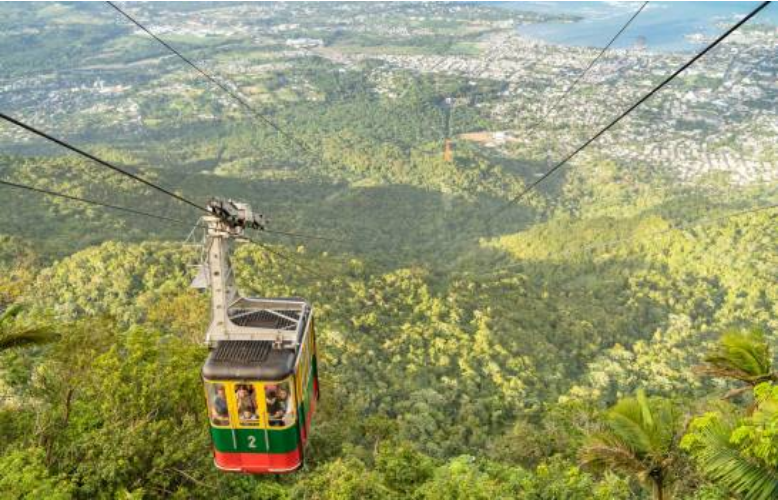
Cable car: this is a mandatory stop if you haven’t been there yet, go! Worth it. It is something special about Puerto Plata and the Country.

La Puntilla Park: this place according to the traveler is perfect for walking and learning a little about POP’s history with beautiful views.

Laguna Sov: “a beautiful place, especially for children. Truly one of the few places in the country with so many different and interactive children’s areas,” he says.

Transparent kayak in Playa Sosua: the traveler says “what an experience, yes, prepare those arms.”

Playa Chiquita: this beach, as its name says, is a small, hidden beach, it is the door to a great treasure, taking a bath in these waters will be spectacular.

Cabarete Caves: this is a walk that must be done with care, but it is well worth it for what you will see inside the cave, a very exciting experience.

Eat at the Rest. Hotel Piergiorgio Palace: this place has one of the best views in the Area. “This hotel for me is even historical and to be able to visit it and spend some time appreciating the view is UFF.”

Sanador River and its beautiful Jacuzzis: as his family explains this is a very special place. “Here we had a great day, jumping, swimming, and getting to know the area. It’s beautiful.”

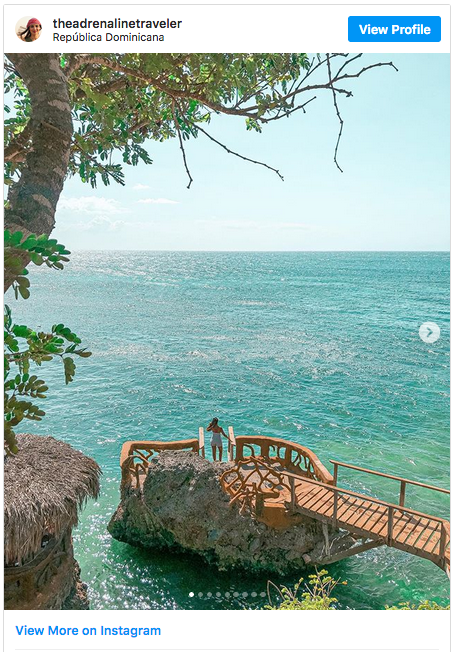
Cayo Arena: this area is the starting point to get to know the beautiful Cayo Arena, the photos of this place speak for themselves, the walk there includes a tour of the mangroves.

Confidence and investment climate improve in Dominican Republic

IMG_3473.jpeg

Confidence in the current environment and industrialists’ prospects improves in the evaluation of indicators in the April-June 2020 quarter compared to the first quarter of January-March. However, the numbers are below the results obtained at the end of 2019.

The Business Climate Index (ICE) increased in the April-June 2020 quarter, from 38.1 in the January-March 2020 quarter to 44.0 in the last quarter. This index measures entrepreneurs’ perceptions about the environment in which they carry out their business, establishing the extent to which they feel more or less optimistic.

The Industrial Confidence Index (ICI) went from 40.3 in January-March 2020 to 49.8 in the quarter April-June 2020. It measures the perceptions that industrialists have regarding the behavior of sales, production, and inventories in the industries, thus indicating the existing probabilities of industrialists increasing or decreasing their production in the short term. Both indices are produced by the Association of Industries (AIRD).